
If two online stores sell the same product at the same price, today the one that delivers better almost always wins.
This is not an opinion, but what the most recent data on Italians’ online purchasing behavior shows.
Behind the steady growth of eCommerce in recent years lies a deeper shift: a market that is increasingly demanding, competitive, and complex to manage, where the decisive variables are no longer just assortment and pricing, but purchasing experience, logistics, and delivery flexibility.
The statistics collected in the Digital Report 2026 by We Are Social, one of the most authoritative references for analyzing the evolution of digital and eCommerce globally and nationally, allow us to read this evolution precisely and understand what is really driving the success of online stores in today’s market.
It’s not just about selling online, but about doing it better, faster, and with as little friction as possible.
In this article we analyze the main data on online shopping in Italy and interpret it to understand what it really indicates for eCommerce companies, retailers, and logistics operators: which trends are emerging, where opportunities are concentrated, and which operational challenges will determine competitiveness in the coming years.
What eCommerce data reveals about online purchasing behavior
In 2025, 26.5 million people in Italy purchased consumer goods online, representing annual growth of +6.9% (in absolute terms, +1.7 million users).
Total spending reached 61.8 billion dollars, up +10.7% year over year, while average spending per user rose to 2,336 dollars, an increase of 3.6%.
There are also two additional figures that help us understand the market’s maturity:
- 42.6% of eCommerce spending comes from purchases via smartphone
- online purchases represent 22.2% of the total retail value of consumer goods
The data clearly shows that not only is the number of users who shop online growing, but the amount each consumer is willing to spend on digital channels is also increasing. But let’s take it one step further and read between the lines: from an alternative purchasing channel, eCommerce has now become a structural part of retail.
How Italian users shop online today
Another extremely interesting figure concerns how Italian users shop online, giving us the profile of a consumer accustomed to using digital tools in a functional and strategic way.
Looking at the data: 44.3% of internet users shop online every week, but purchasing is not the only relevant activity. 25% use price comparison tools and almost 10% rely on installment payment solutions.
The picture that emerges is that of an active user who compares products and prices, evaluates and selects before deciding and proceeding to online checkout. This means that choosing a brand or online store depends not only on the offer but above all on the quality of the process.
This becomes even more evident when we look at what truly motivates a user to complete an online purchase. The most influential factors declared by users are:
- free shipping: 61.9%
- discounts and coupons: 43%
- reviews from other customers: 37%
- simple checkout: 35%
- easy returns: 32.5%
- next-day delivery: 26.2%
Notice anything in particular? Here’s the key point: logistics plays a central role in eShoppers’ purchasing decisions. Users look for fast, affordable shipping and easy returns. Discounts, coupons, and competitive prices take a back seat if purchased products do not reach the end customer efficiently.
The factor that truly determines conversion: logistics
Marketing experts may not like it, but the data is clear: many of the decisive variables for online purchases are not marketing-driven, but logistics-driven. Free shipping, simple returns, and fast delivery do not depend on the website, but on the distribution infrastructure.
Why is this revolutionary? Because it changes the competitive paradigm. In a mature market, price attracts (this is always true), the brand convinces, but logistics converts.
In simple terms, whoever manages to offer flexible, fast, and predictable deliveries reduces cart abandonment and increases customer loyalty. Those who don’t lose sales before they even get to compete.
What this data really indicates for the market
If we put all the indicators together, a clear dynamic emerges. Italian eCommerce is not just going through a growth phase, but a phase of competitive selection.
When a sector matures, users become more demanding, margins tighten, and operational differences weigh more than product differences. That is exactly what the Italian numbers show. Simply being online is no longer enough. What’s needed is an infrastructure capable of supporting volumes, expectations, and ever-higher service standards. In other words, you need to be better organized than your competitors.
The trends redefining Italian eCommerce
There are also other signals that help us understand the direction the market is moving in.
The first concerns the growth of digital grocery, one of the most operationally complex segments to manage. Users ordering groceries online number 15.9 million, up 7.4%, while the sector’s value has reached 5.91 billion dollars.
This is not a minor detail because grocery is the category most sensitive to delivery times, product availability, and logistics management. If this segment is growing, it means distribution infrastructure is becoming a central element in operators’ competitiveness.
The second signal concerns the overall weight of online within retail. When more than 22% of consumer goods spending takes place through digital channels, online purchasing stops being an alternative and becomes a standard consumption mode. This shift changes user expectations: what used to be a plus (fast delivery, easy returns, accurate tracking) now becomes a standard.
The result is a market in which the post-purchase experience is no longer an accessory phase of the process, but an essential component of the commercial offering, and it is precisely here that competition among operators will increasingly concentrate.
Where eCommerce competitive advantage is decided today
When a market grows and becomes crowded, the difference is no longer made by visible strategies, but by infrastructure. In eCommerce this means:
- scalable logistics systems
- predictable deliveries
- flexible options for users
- efficient returns management
These levers may be less visible than communication or pricing, but they have a direct impact on financial performance because they affect conversion, operating costs, and customer loyalty.
How to improve eCommerce conversions: operational priorities for companies
From an operational perspective, all this data points to three concrete priorities.
Reducing logistical uncertainty to increase conversion
The first concerns conversion. Improving the website without intervening in the delivery experience means leaving a decisive part of the process uncovered, because non-transparent shipping, uncertain delivery times, or unexpected final costs directly affect cart abandonment. Companies that invest only in advertising without reducing logistical uncertainty increase traffic but do not maximize the value of each visit. Conversion grows when users perceive that delivery and returns will be simple, clear, and predictable.
Building scalable infrastructures before growth puts them under stress
The second concerns scalability. With users and spending volumes increasing, non-elastic infrastructures quickly become bottlenecks. Rigid logistics systems, limited fulfillment capacity, or insufficiently widespread distribution networks slow operations precisely when demand increases, turning growth into operational pressure instead of opportunity.
Designing the post-purchase experience as a competitive lever
The third concerns the post-purchase phase, which weighs more and more in the initial decision. Tracking, delivery options, ease of returns, and availability of pickup points influence store choice even before the order is placed. When customers perceive that delivery and returns will be simple and predictable, trust increases and so does the likelihood of repeat purchases. This is where competitive advantage is consolidated today.
Why Out-of-Home is a strategic lever
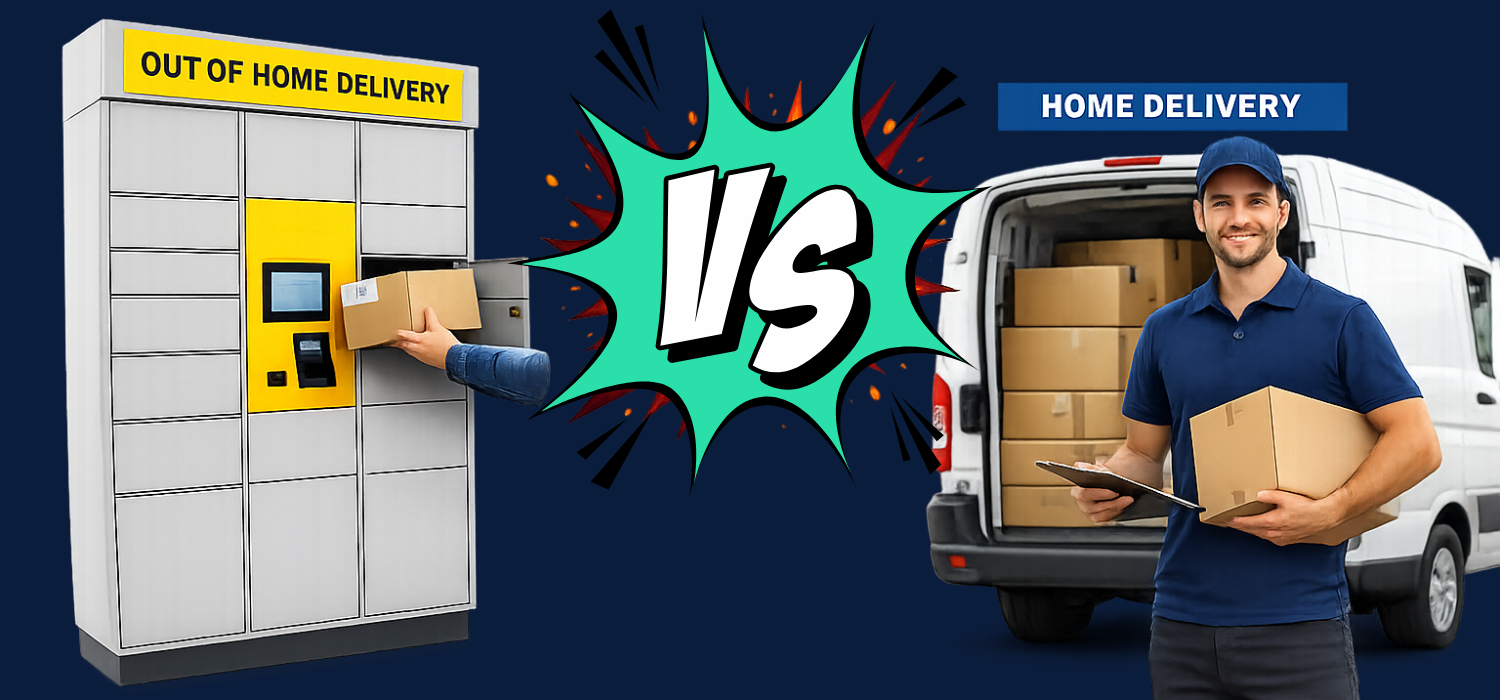
If shipping and returns influence purchasing decisions, the way an order is delivered becomes a competitive lever.
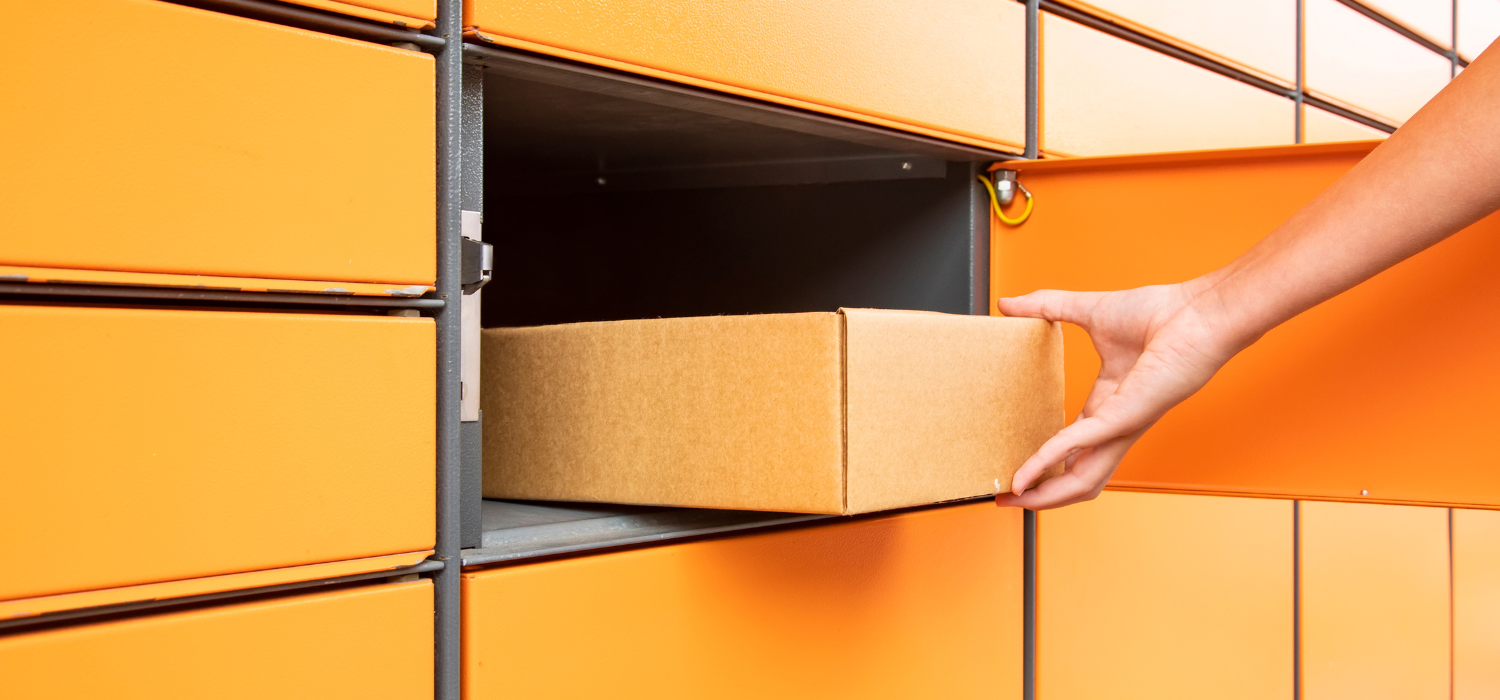
Out-of-Home delivery solutions such as Pickup Points and Lockers meet this need because they improve the user experience and make last-mile logistics more efficient.
They allow greater flexibility, reduce delivery costs, and limit failed attempts. In mature markets they are becoming a structural component of eCommerce logistics.
It is in this scenario that infrastructure solutions such as those offered by GEL Proximity, with a network of over 500,000 Pickup Points and Lockers integrable into eCommerce and logistics systems, enable operators to adapt more quickly to a market that demands speed, scalability, and operational reliability.
Want to integrate Out-of-Home deliveries into your online store quickly and easily? Discover GEL Proximity services or contact us for a personalized demo.