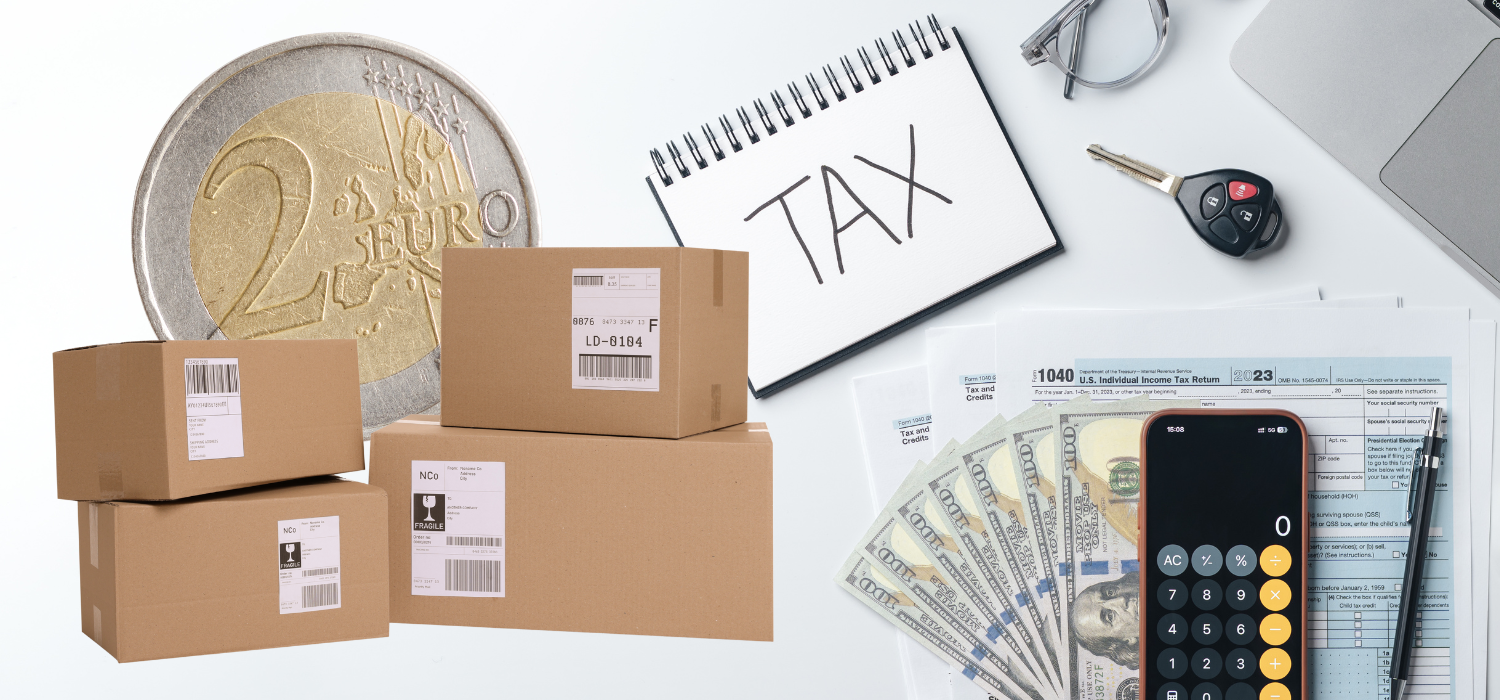

Just a few days after the latest European regulatory update on duties applied to eCommerce shipments, the regulatory framework has become much clearer compared to the scenario described in our previous analysis. While at that time there was talk of proposals and political negotiations, today there is a formal decision by the Council of the European Union that defines amounts, timelines, and operational procedures.
For those who have not read our previous in-depth article, the starting point remains the same: the EU is rewriting customs rules because the current system can no longer handle the volume of low-value shipments generated by international online commerce.
To better understand the scale of the phenomenon, consider that, according to the European Commission, the volume of small parcels entering the EU has doubled every year since 2022, and in 2024 alone about 4.6 billion small packages entered the European market, more than 91% of which came from China.
In this article we analyze only the most recent developments, what really changes, and what operational consequences eCommerce companies and logistics operators should expect.
What the EU regulation provides (in brief)
The cornerstone of the reform is the gradual elimination of a rule now considered outdated and distortive to competition: the duty exemption for shipments under €150. This threshold was introduced at a time when international online commerce was marginal and was mainly intended to simplify occasional shipments between private individuals. Today, however, it has become one of the main factors driving the massive growth of low-value eCommerce imports.
For a more complete analysis of the underlying regulation and its political and fiscal motivations, please refer to our previous article.
The EU’s official decision: flat €3 duty from July 2026
On February 11, 2026, the EU Council definitively approved the introduction of a flat duty of €3 on items contained in shipments under €150, which will enter into force on July 1, 2026.
The measure was conceived as a transitional solution: it will remain valid until 2028, when the new European digital customs system will be operational and replace it with a fully harmonized tariff model based on product classification.
An important technical detail concerns the calculation method: the duty is not applied to the package as a whole, but to the product categories contained in the shipment, identified through tariff codes.
End of triangulation: the real operational change
One of the most immediate effects of the reform concerns a very widespread mechanism in cross-border trade, namely so-called logistics triangulation. In practice, some operators would bring goods into a Member State with less stringent controls and then redistribute them throughout the EU after initial customs clearance. This made it possible to bypass stricter checks and, in some cases, avoid national contributions or more rigorous customs inspections.
With the introduction of a uniform duty applied across the entire Union, this strategy loses much of its economic usefulness. If customs treatment is identical in Milan, Rotterdam, or Budapest, there is no longer a preferred entry point, and the logic of shifting routes to optimize costs becomes ineffective.
For the logistics sector, this means a possible redistribution of flows and a reduction in the competitive advantage of some European hubs over others.
The end of the exemption threshold and the issue of split orders
Over the years, the €150 threshold has had an important side effect, encouraging sales models designed to stay below that limit. It was not uncommon, in fact, for platforms and checkout systems to automatically split an order into multiple separate shipments precisely to avoid exceeding the threshold and therefore paying duties.
The abolition of the exemption removes this incentive at its root. When the system is fully operational and duties are applied from the first euro of value, artificially splitting orders will no longer produce economic benefits.
A shift in responsibility across the supply chain
Another central element of the reform concerns customs responsibility. The new European model provides that marketplaces and sellers take on a direct role in declaration and compliance obligations, replacing a system in which many responsibilities instead fell on final consumers or couriers.
This shift fundamentally changes the operational logic of international digital commerce: anyone selling into the EU will have to ensure accurate customs data, correct classifications, and complete information about goods.
What happens now to the Italian eCommerce tax
The European decision also changes the fate of national fiscal initiatives announced in recent months, including the Italian proposal to introduce a levy on eCommerce parcels arriving from abroad.
Since customs policy falls within the exclusive competence of the European Union, Member States cannot independently apply duties or equivalent measures on imports. Consequently, any Italian tax could enter into force only if compatible with the European framework, or it would have to be modified or withdrawn to avoid regulatory conflicts.
In practice, with the introduction of the harmonized EU system, it is likely that national initiatives will be absorbed or replaced by common rules, reducing regulatory fragmentation among Member States.
Immediate impact on logistics and fulfillment models
From an operational standpoint, the new regulatory framework does not simply introduce an additional cost. It mainly changes the economics of extra-EU direct shipping, that is, the model based on shipping individual packages directly to the final European customer.
When each shipment requires tariff classification and incurs a duty, even if modest, it becomes more convenient to consolidate goods in European stock and ship locally. This could push many companies to rethink their fulfillment and distribution strategies.
Why the reform pushes toward more efficient logistics models
The increase in administrative complexity therefore makes last-mile efficiency even more central. As margins and timelines are compressed by new regulatory obligations, the ability to optimize deliveries will become a decisive competitive factor.
In this scenario, Out-of-Home networks based on Pickup Points and Lockers make it possible to consolidate deliveries, reduce operating costs, and improve distribution scalability. It is therefore no surprise that many companies are already reassessing their European logistics architecture precisely as the customs reform enters its implementation phase.
For eCommerce companies and logistics operators, this reform therefore marks the beginning of a new phase in which competitiveness and compliance will become two sides of the same operational strategy.
If you want to prepare your logistics infrastructure right away for the new European rules and reduce the operational impact of customs changes, explore GEL Proximity’s Out-of-Home solutions and discover how to integrate a network of over 500,000 Pickup Points and Lockers into your distribution strategy.