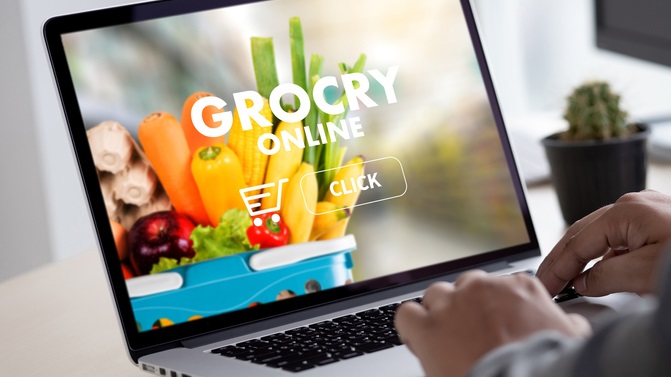

In 2021, online spending in the Food & Grocery sector will exceed 4 billion euros, registering a 38 percent increase compared to 2020, a year in which there had already been more than double the average growth in the online market for products.
The figure comes directly from research conducted by the Netcomm – Politecnico di Milano Observatory on food eCommerce, which points out that the outbreak of the health emergency has caused a boom in online demand and, consequently, an acceleration in the eCommerce strategy of all major players that will not stop even in the current year.
In 2020, in fact, online spending in the Food&Grocery sector had already reached 2.7 billion euros with a growth of 70 percent over 2019 (equal to about 1 billion euros in absolute terms) and more than 39 million orders fulfilled, and for 2021 the expectations are also quite high.
The growth of the different segments
The Food & Grocery sector, which includes different types of food and non-food products (this includes, for example, home and personal care products, Health & Care, sold through the online initiatives of supermarkets or branded industries), is the first product segment that contributes the most to the growth of B2C eCommerce product purchases (the second is the Computers & Electronics sector, the third the Fashion sector, which we have discussed here), but analyzing the different market segments that make up Food Delivery we find that these are growing at different rates.
Food Delivery, thanks in part to the expansion of eCommerce service offerings, emerges as the segment with the highest growth (+56 percent), surpassing the 1.4 billion euro threshold. The same value, but with a 39 percent increase, for Food Grocery, i.e., supermarket products, followed by the Food and Wine segment, which takes the third position with +17 percent to 750 million euros.
Mobile also grows
Another element to highlight for the online Food market concerns the growth of purchases made through mobile devices and smartphones, which have registered a 68 percent increase, establishing itself as the main purchasing channel with an overall weight of 59 percent on the entire segment and a turnover of almost 1.5 billion euros.
Focus on logistics
During the lockdown of the early 2020s, the food-related logistics sector has been under heavy stress related to an increase in demand with peaks as high as 300/400%.
Logistics has always played a crucial role especially in a sector like Food, where preserving the freshness of products is a key element. Proper packaging and shipping methods can make all the difference in consecrating the quality of one eCommerce over another, and at the same time, end-consumer awareness can help ease the stress to which the entire supply chain is constantly subjected.
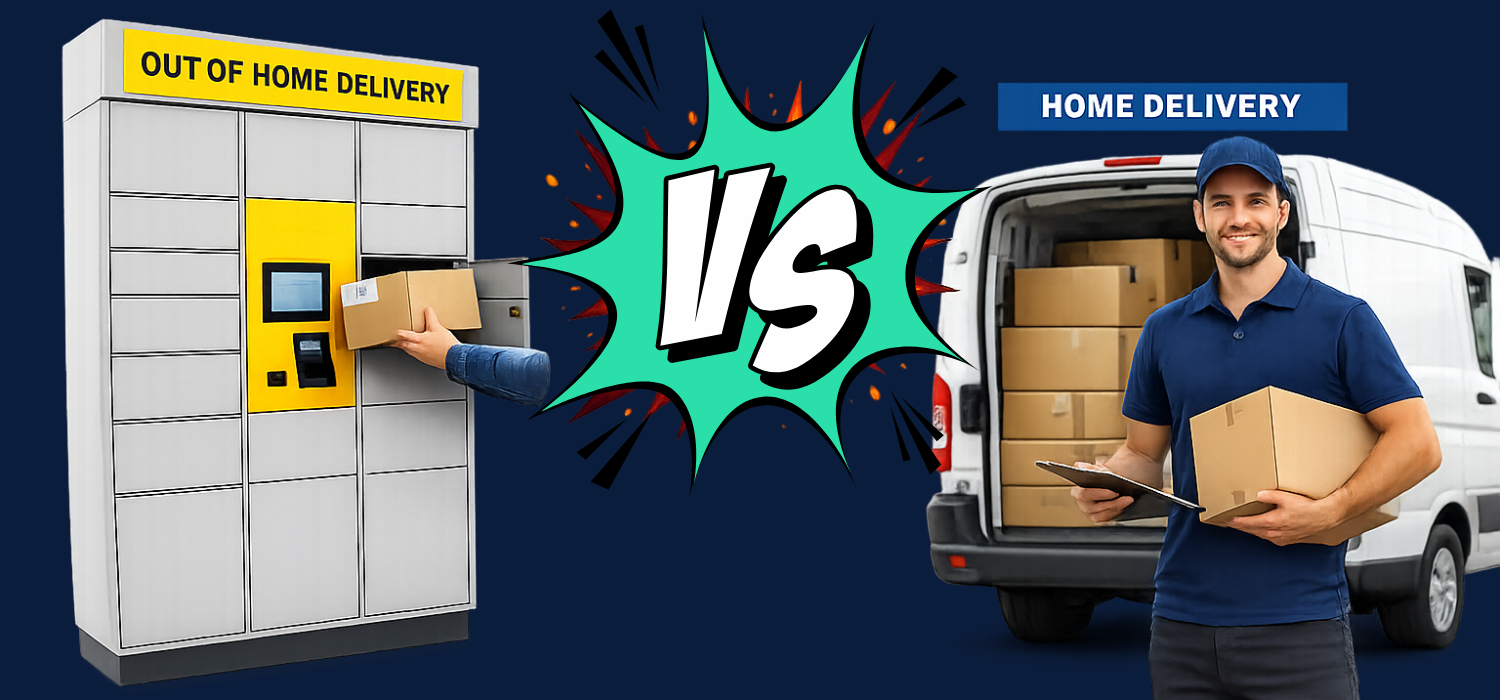
More and more super-stores, for example, are providing Lockers and Pickup Points at which groceries ordered online can be picked up-much more sustainably. Click & collect or drive & collect is also becoming increasingly popular, thus finding a viable and practical alternative to traditional home delivery.
GEL Proximity, by aggregating networks of Italian pickup points, allows each eCommerce to add to the checkout a map showing the Pickup Points available at that moment or those most convenient for the eCommerce and the end user.
It then automatically manages the exchange of information necessary for shipping relieving on the one hand the workload of eCommerce and Couriers and on the other hand allowing both to decrease inventory, increase the volume of parcels transited and increase margins. Contact us now.