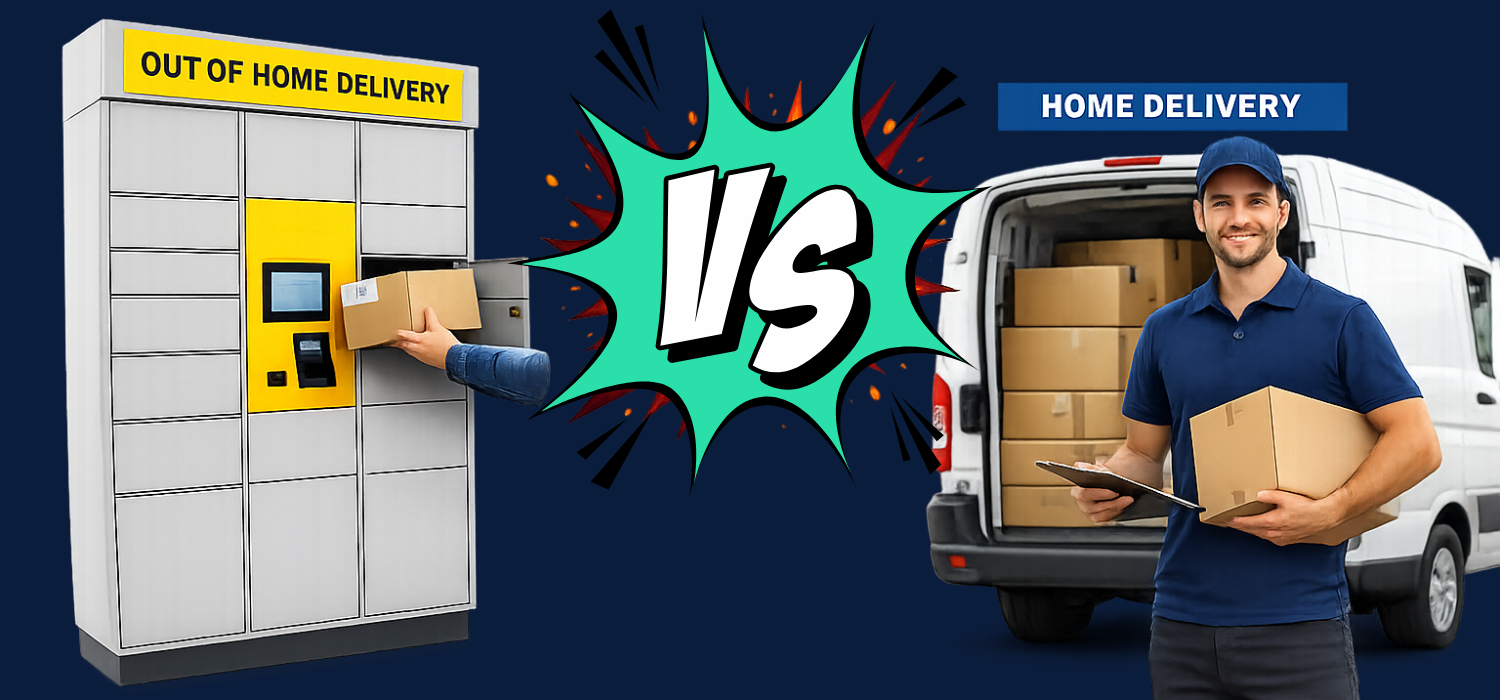

For years, home delivery has been considered the inevitable destination of eCommerce: you buy online and the parcel arrives at your door. A simple, linear, seemingly perfect model. But in large cities, where time is fragmented and customers are not always at home, what once seemed like the most convenient solution is proving to be the most fragile point of the purchasing experience. The home delivery model is beginning to show its limits.
This is not a passing trend. When delivery fails, the impact is immediate: customer service workload increases, operational costs rise, and the likelihood of repeat purchases declines. In other words, the delivery experience directly affects business performance.
This is where Out of Home delivery through Pickup Points and Lockers stops being just an “extra option” and becomes a structural lever. Not only do consumers appreciate it, but it also reduces friction at a decisive stage—the transition from checkout to delivery, the moment when the eCommerce promise must become reality.
In this article, we analyze what changes—in terms of conversions, customer experience, and financial results—when an eCommerce business integrates Lockers and Pickup Points as an alternative to home delivery.
Out of Home and customer experience: what changes for the end customer and why merchants should care
The first thing to keep in mind is that customer experience is not separate from logistics—it is a direct consequence of it.
The difference between home delivery and Out of Home delivery is not just about perceived convenience, but about the level of control over the delivery process, its reliability, and its operational costs.
For an eCommerce business, the key point is that whoever controls the post-purchase experience controls a significant part of the brand’s perceived reliability. For logistics operators, it is equally strategic: a more predictable delivery flow means fewer exceptions to manage, higher productivity, and lower indirect costs.
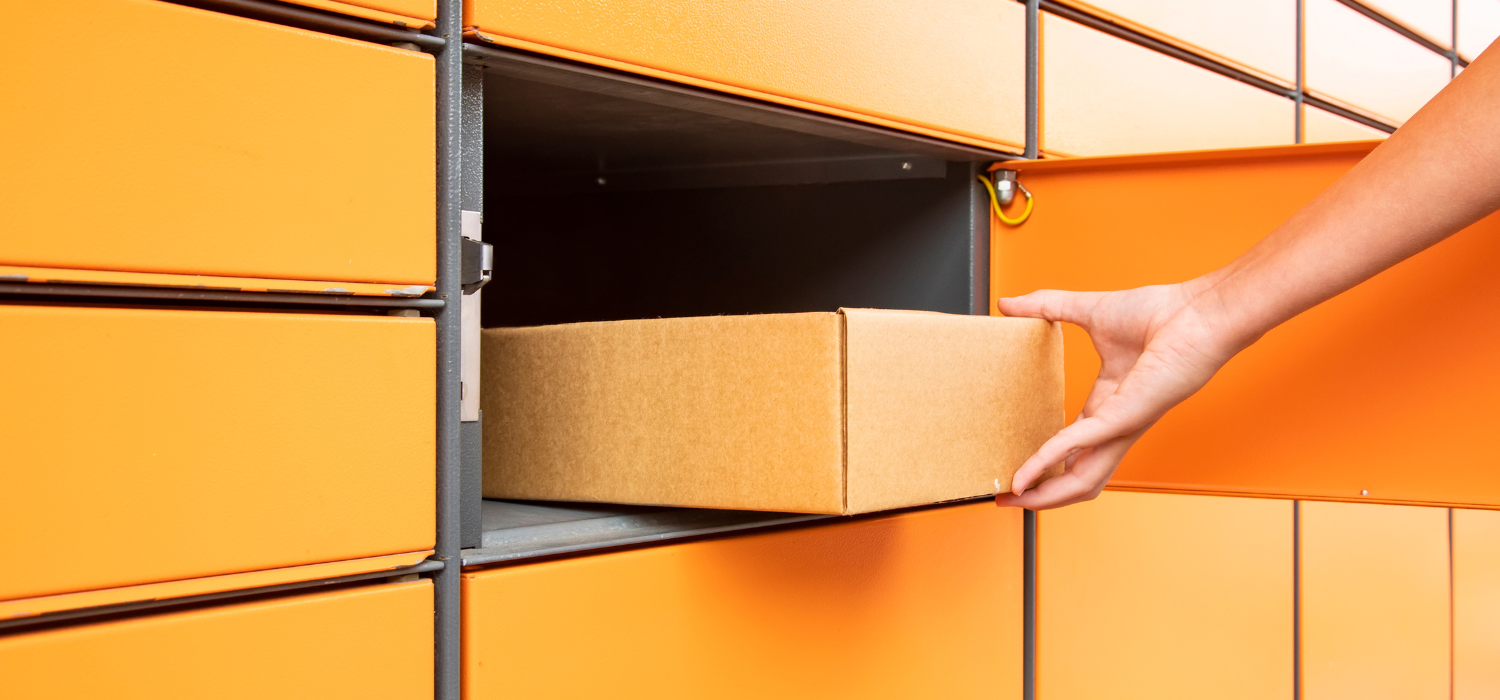
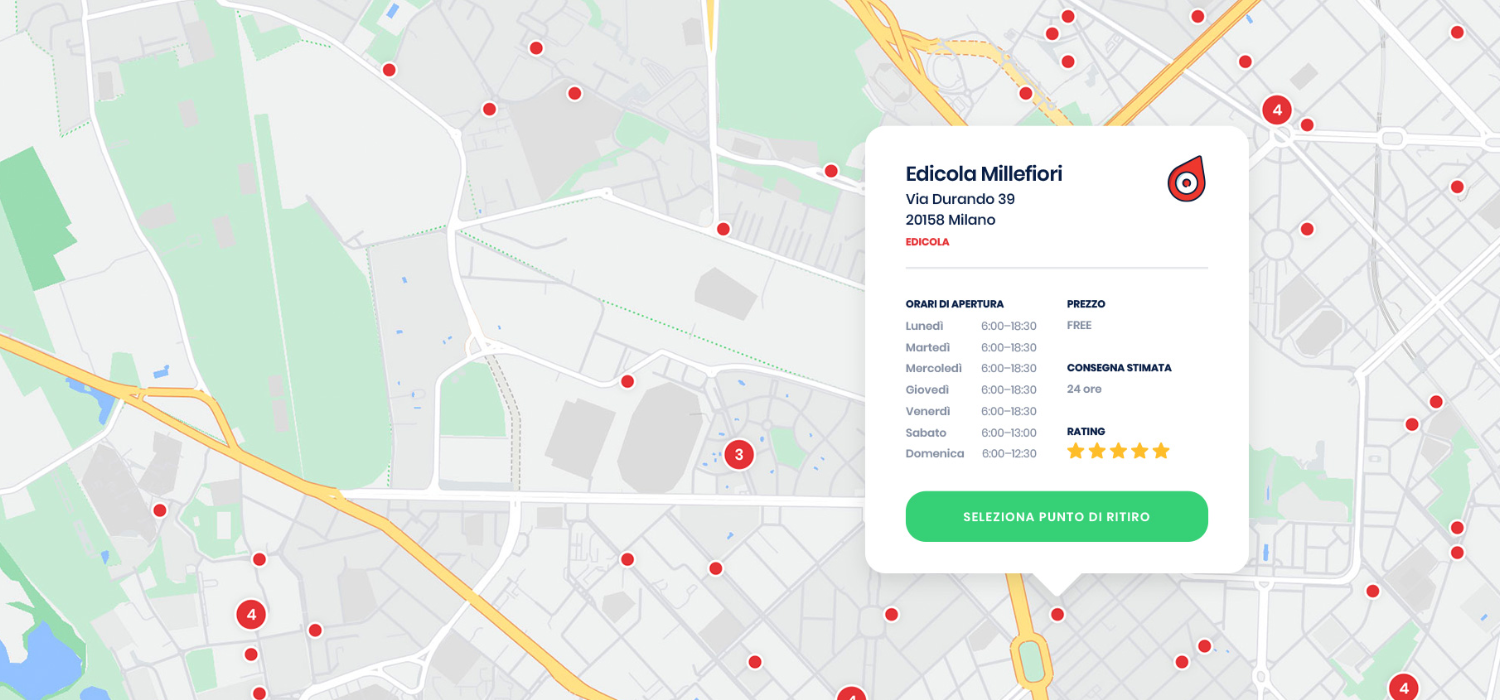
This is precisely where Out of Home makes a difference. By shifting collection to a fixed point—whether a Pickup Point or a Locker—it reduces variability linked to the recipient’s presence. Customers no longer need to be home at a specific time; they can collect their parcel whenever they choose.
Flexible 24/7 pickup and customer autonomy: convenience is not “receiving,” it is choosing
In cities, home delivery does not automatically equal convenience. In fact, it often becomes a constraint. Waiting times, intercoms, concierges, time-slot changes, notifications, rescheduling—all of this carries operational costs that remain invisible until they become a chronic problem.
Out of Home reverses the paradigm by introducing a decisive factor: pickup autonomy.
Customers no longer have to align their day with the courier’s schedule; they can collect their parcel when it suits them, often outside traditional hours. At a perception level, this difference matters greatly—the experience becomes “unexpected-proof.”
For those selling online or managing deliveries, this is not a niche phenomenon. An increasing share of e-shoppers choose Out of Home delivery, driven by proximity and flexibility. The “24/7” factor is not just about convenience—it reduces the perceived risk of online purchases, especially in urban contexts where being home is increasingly uncertain.
For eCommerce businesses and carriers, this autonomy creates cascading effects: fewer failed attempts → fewer customer service requests (“Where is my parcel?”, “I wasn’t home”) → fewer operational exceptions. In short, lower costs and less friction.
When the Out of Home network is widespread, the advantage becomes psychological as well. It is no longer about “going out of your way to collect a parcel,” but picking it up along an existing route (home–work commute, station, supermarket). This is where the Network makes the difference: a Locker is truly strategic when it integrates into the customer’s daily paths.
Impact on loyalty and checkout conversion: delivery as a sales lever
If the first part concerns the post-purchase experience, the second touches an even more delicate point: how delivery choice influences the purchasing decision.
A strong signal comes from the Ecommerce Delivery Benchmark Report 2024 by Metapack. The report highlights how, in the pre-purchase phase, the customer journey increasingly becomes a search not only for the right product, but also for the delivery option that best fits individual needs. It is no coincidence that about one-third of consumers want to know delivery and return options before even considering an online purchase.
This means the variety of available delivery and return options directly affects conversion within the purchase funnel. If delivery methods are not perceived as aligned with the user’s lifestyle, friction arises before the order even exists. Conversely, offering multiple delivery options—including Out of Home alternatives such as Pickup Points and Lockers—helps reduce cart abandonment and improve the overall purchasing experience.
If you manage an eCommerce business, you know that cart abandonment has many causes, but the principle remains the same: every friction point at checkout represents a potential loss in conversion. Delivery options, when limited, unclear, or inadequate, become one of those friction points.
For eCommerce operators, the message is clear: not all customers are the same, nor do they share the same needs. The ability to offer differentiated delivery methods directly impacts sales performance. In urban settings, where home delivery may be perceived as uncertain or restrictive, the availability of a nearby Locker or Pickup Point can make the difference between “I’ll buy it” and “I’ll think about it later.”
Out of Home for eCommerce and logistics operators: from option to competitive advantage
If delivery influences purchasing experience and brand perception, then for eCommerce businesses and logistics operators, Out of Home is no longer just an operational alternative—it is a strategic lever affecting multiple dimensions of the business.
Integrating Pickup Points and Lockers means directly impacting at least three decisive performance areas:
-
Conversion: increases the likelihood that customers find a delivery method compatible with their needs and complete the order;
-
Retention: a frictionless pickup experience reduces the risk that a delivery issue becomes a reason not to return;
-
Operational efficiency: fewer exceptions, less manual handling, greater predictability of flows.
In summary, Out of Home transforms a stage traditionally exposed to unpredictable variables into a more controllable process. For logistics operators and carriers, this means better management of urban complexity—traffic, absences, access constraints—while reducing exceptions and inefficiencies. For eCommerce businesses, it means making the promise of “convenient delivery” less dependent on external factors.
The decisive point: having Lockers at checkout is not enough, you need an integrable Network
Once the impact of Out of Home on conversion and retention is clear, the focus becomes operational. For an eCommerce manager, the question is no longer whether to offer Lockers and Pickup Points at checkout, but how to integrate them simply and scalably within existing systems.
The answer to “how” rests on one key awareness: it is not enough to have a Locker infrastructure. The real value emerges when the Network is supported by technology capable of making it integrable, scalable, and interoperable.
With a Network of over 500,000 active Pickup Points and Lockers distributed extensively across the territory, GEL Proximity enables eCommerce businesses and logistics operators to turn Out of Home into a fully integrated asset within their systems. Not just more choice at checkout, but greater predictability in the post-purchase experience and a delivery and returns management model supported by broad, interoperable coverage.
Want to understand how to integrate Pickup Points and Lockers into your checkout and logistics flows, improving conversions and customer experience without complicating operations? Discover more about our services or contact us for a personalized demo.