
In 2026, last-mile eCommerce is undergoing a structural shift. Home delivery remains central, but on its own it is no longer sufficient to sustain growing volumes, operating costs, and new service expectations.
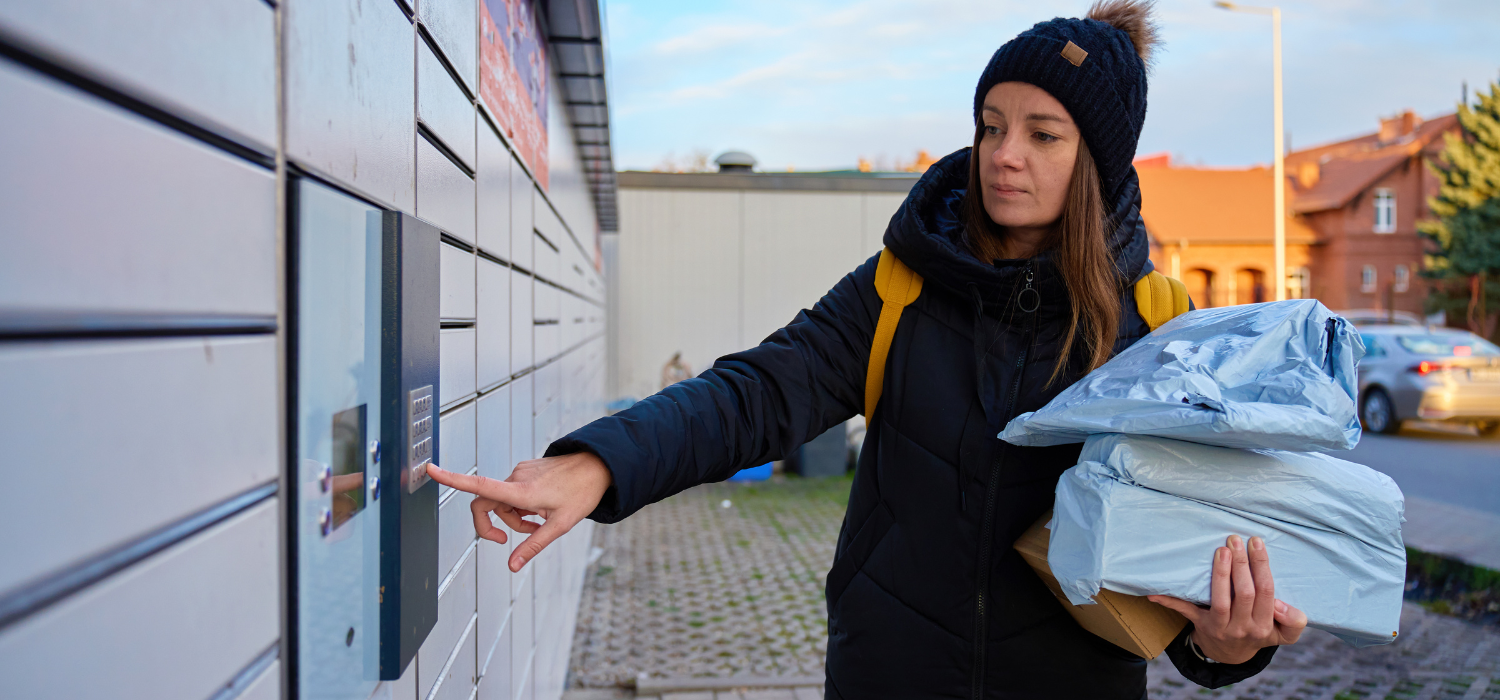
In this context, the pick-up economy is taking shape: a model in which Pick-up Points and Lockers become a structural component of delivery and returns processes, no longer just an ancillary option. The momentum comes from a combination of economic factors, urban constraints, and the demand for greater control over the logistics experience.
In this article, we analyze what the pick-up economy is and what changes in 2026 for eCommerce, logistics operators, and carriers, with a focus on operational implications and the evolution of Out-of-Home models.
Why the pick-up economy accelerates in 2026
In recent years, the last mile has become the main pressure point of eCommerce. This is where operational inefficiencies, hard-to-compress costs, and increasingly high customer service expectations are concentrated.
In 2026, this pressure intensifies further: volumes continue to grow, while cities and supply chains demand greater control over the impacts of last-mile deliveries.
In this context, Out-of-Home solutions are no longer marginal. In Europe, around 35% of eCommerce deliveries already take place outside the home, while for returns the share rises to around 80%. This figure is significant because it signals a clear shift in function: Out-of-Home is no longer only about delivery, but has already become the prevailing operational model for returns management as well.
From flexibility to operational predictability
The spread of the pick-up economy cannot be explained solely by greater flexibility for the end recipient. For eCommerce players and logistics operators, the core issue is flow predictability. Consolidating deliveries and pick-ups across a network of Pick-up Points and Lockers reduces the variability typical of the last mile. In other words: fewer failed delivery attempts, fewer rescheduling events, and lower indirect costs related to customer care, storage, and redeliveries.
In 2026, the pick-up economy takes shape precisely as a response to this volatility—not as an alternative to home delivery, but as a tool to make the last mile more controllable and predictable.
More regulated cities, more constrained logistics models
The urban context is also pushing in this direction. Low Emission Zones (LEZs) and traffic restrictions have become a structural condition of urban logistics. According to Clean Cities Campaign, by 2025 the number of active LEZs in Europe had reached 507.
In such a scenario, models that reduce kilometers traveled, delivery attempts, and unproductive stops gain strategic value. Out-of-Home therefore becomes not only a commercial choice, but a planning tool and a way to adapt to new urban regulations.
Lockers and Pick-up Points become part of the infrastructure
To truly understand the pick-up economy, however, a shift in perspective is required. Lockers and Pick-up Points should no longer be seen as simple delivery locations, but as nodes within a logistics network.
This change in approach explains why, in 2026, eCommerce players, logistics operators, and carriers stop asking whether to offer Out-of-Home options and instead begin—finally—to focus on how to integrate them stably into their operating models.
Network effects and the logic of density
Looking at the evolution of European logistics networks, one key element emerges: the effectiveness of Out-of-Home increases with network density and integration. Put simply, the more points are distributed across the territory and interoperable, the easier it becomes to concentrate flows, reduce last-mile dispersion, and make deliveries and returns predictable.
The market is moving precisely in this direction. Leading OOH operators are investing in increasingly extensive networks and in the ability to manage high volumes on a continuous basis. In 2024, for example, InPost handled 1.09 billion deliveries, further expanding its network of automated lockers. This figure confirms that demand for Out-of-Home solutions is no longer episodic, but structural.
Out-of-Home as the standard for returns: what changes in 2026
In 2026, returns management represents one of the main factors in the economic balance of eCommerce—not so much because of volumes themselves, but because of the impact returns have on logistics costs, flow organization, and overall margins.
Upstream interventions, such as more accurate product information or tools that help customers choose the correct size or variant before purchase—particularly relevant in the fashion segment—can help reduce the number of returns. However, the real difference is made downstream, in the ability to manage return flows in a uniform and scalable way.
In this scenario, the pick-up economy establishes itself as the natural operational solution. When Lockers and Pick-up Points become the primary channel for returns, the return of goods ceases to be a costly exception and becomes a standardizable process—easier to plan and manage across the entire supply chain.
What changes for eCommerce and logistics operators in 2026
2026, therefore, does not require multiplying delivery options, but managing them in a more integrated way.
The pick-up economy directly impacts processes—from how options are presented at checkout to shipment orchestration, parcel tracking, exception management, and the reliability of delivery and return lead times.
In this sense, Lockers and Pick-up Points do not only influence the final customer experience, but become an operational tool to maintain control, service continuity, and quality at ever-higher volumes, thereby reducing complexity and variability in the last mile.
Out-of-Home solutions in the pick-up economy: GEL Proximity
With the rise of the pick-up economy, the challenge for eCommerce players and logistics operators—as anticipated—is no longer whether to adopt Out-of-Home, but how to integrate it effectively into delivery and returns processes.
The central issue becomes operational management: connecting Lockers and Pick-up Points to existing flows, information systems, and orchestration logic, while avoiding the risk that new options translate into new complexity.
At this stage, Out-of-Home stops being a simple service choice and becomes a structural component of logistics processes, with direct effects on standardization, flow control, and overall last-mile reliability.
This is where GEL Proximity comes into play. Its technology enables Out-of-Home services by providing access to a network of over 500,000 Pick-up Points and Lockers designed to support eCommerce deliveries and returns at a European scale.
In practical terms, this means offering eCommerce players, logistics operators, and carriers a simpler way to manage Out-of-Home at scale: a single integration to access an extensive network of Lockers and Pick-up Points, more uniform processes for deliveries and returns, and greater operational continuity even at high volumes. The result is reduced complexity, greater flow control, and a more predictable last-mile operation.
If you run an eCommerce business, integrating Lockers and Pick-up Points into your logistics processes is a priority for 2026!
Discover how GEL Proximity technology supports Out-of-Home deliveries and returns across Europe.