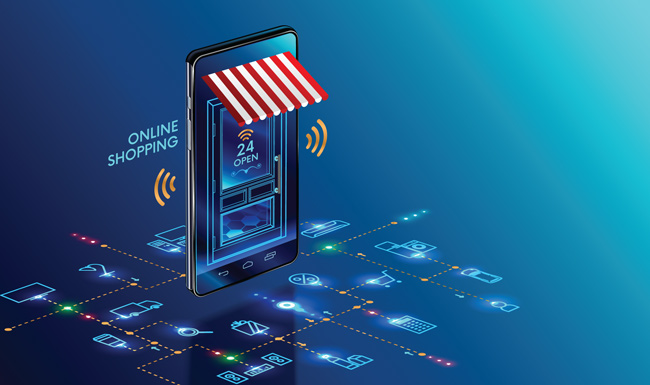

New market trends and the demands of increasingly demanding and impatient digital consumers are prompting businesses to invest in new integrated and interconnected technologies that enable them to enjoy various advantages and find quick and easy solutions to problems that may arise at the sales stage.
Technology integration for an eCommerce channel is therefore not only a significant asset, but also a distinctive element on the basis of which to increase its reliability and credibility within an increasingly rapidly expanding market.
Technology integration in shipping
When it comes to eCommerce, we sometimes tend to underestimate the importance of a phase that is as important as it is strategic in the sales process: shipping.
Speed, reliability and cost-effectiveness of delivery are three elements that e-Shoppers can no longer fail to consider. Suffice it to say that shipping costs influence the choice of an eCommerce for 93 percent of users, speed for 86 percent and, finally, the possibility of always being updated on the status of delivery for 25 percent (SendCloud data).
Another fact that should not be underestimated is that for more than 60 percent of digital consumers, being able to choose where to receive the goods ordered online is crucial, but only 31 percent of sellers make available the option to take advantage of the delivery mode at Pickup Points or Lockers. Why?
The difficulties
Let’s start with a fact: technological integration is complex and rather expensive, thus representing a limitation for several eCommerce entities that are thus further disadvantaged compared to those who enjoy a higher degree of integration.
There is also a cultural factor that results in a lack of enthusiasm on the part of end users to take advantage of alternative and sustainable delivery and pickup modes, as evidenced by the still scarce citizenry awareness initiatives and the reduced territorial diffusion of Lockers.
The good news, however, is that something is changing. The issue of sustainability is gaining more interest and importance for users, and efficient and sustainable solutions, not only environmentally but also economically, are beginning to appear on the scene on the technological side as well.
The contribution of GEL Proximity
GEL Proximity, for example, represents an environmentally sustainable innovation that can concretely help an existing eCommerce site or a new online store to improve its performance by directly managing the relationship between the shopping cart and thousands of proximity logistics solutions for picking up a package or making a return.
The benefits you can gain from integrating GEL Proximity on your sales channel are: Increased conversions, Increased sales, Reduction in shipping costs, Reduction in technology costs, Improved user experience, Reduced pollutant emissions.
All with an eye toward cost as well. Not bad, right? If you are interested in getting to know us and better understand how we can help you, contact us now here.
When we talk about technology integration, however, we also refer to other tools, more or less well-known, that can help an eCommerce channel improve its performance. Let’s look at some of them.
ERP programs
The acronym ERP stands for Enterprise Resource Planning. In concrete terms, it is a program dedicated to business management and enterprise resource planning that enables the digitization of all information and its collection in one place.
Consequently, by integrating an ERP program to their eCommerce channel, customers will be able to view available inventory, check the status of orders, and track shipments of their purchases.
The benefits, again, are not insignificant. First and foremost: Increased customer satisfaction, Increased internal productivity, Minimization of the risk of “stock breakage”, Improved shipping and billing.
The CMS
The acronym CMS stands for Content Management System and is nothing more than software that helps users create and manage a website and its content. For example, have you ever heard of WordPress?
Some of the most common CMSs for an eCommerce include: Shopify, PrestaShop, Magento, BigCommerce, WooCommerce, OpenCart.
It is important to note that the technological integrations you can make to your online shop will also depend greatly on the type of CMS you choose when building your store. The choice of the most suitable CMS also depends on several factors, including: The budget available, The type of products sold, The web skills of those who will manage the site, The national or international sales network.
As you may have noticed, the first of the criteria is budget. In fact, technology integration inevitably represents a cost, sometimes a substantial one, whether you already have an online sales channel or are in the process of creating one, for example if you are a small neighborhood store and plan to take on the challenge of proximity commerce. Nevertheless, the benefits in terms of return on investment can be considerable.
CMR technology
CRM stands for customer relationship management. By definition, it is software that allows you to manage the entirety of your relationships and interactions with your customers. In other words, it is a system that helps collect and store contact details and better manage sales.
Thus, it is a strategy that is strongly oriented to the customer and his or her needs, which allows one to improve internal processes, productivity and, of course, the relationship with one’s community, so as to increase loyalty.
Again, there are different types of CMR software, which we will analyze in detail in the next “installments.”