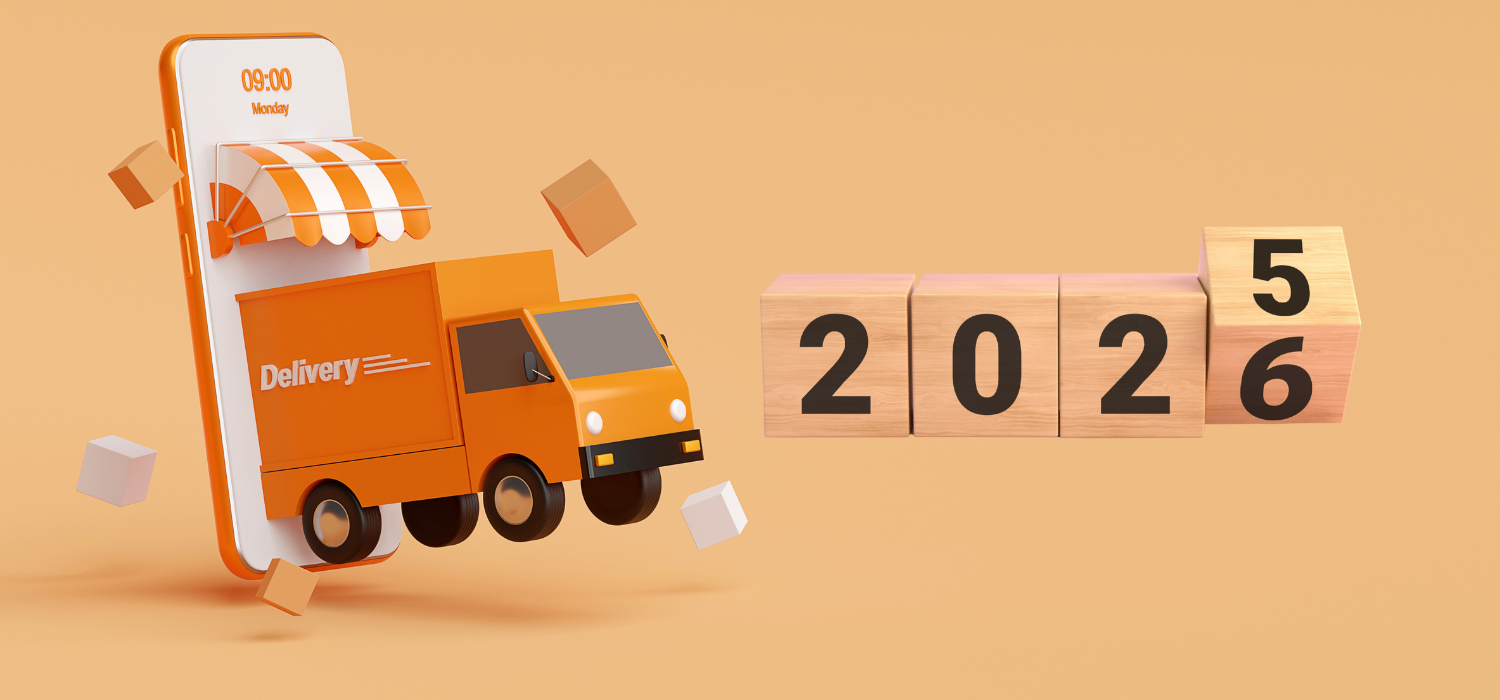

A year-end assessment of deliveries, returns, and technological infrastructures that are reshaping eCommerce.
2025 has been a pivotal year for eCommerce.
After years in which online sales were mainly described through double-digit growth figures, the past year marked a new phase: maturity. Because in the digital market, selling is no longer enough—every aspect of the post-checkout experience must work flawlessly: deliveries, returns, tracking, and sustainability.
For merchants, logistics operators, and carriers, this transition brings new priorities and new success metrics. At the center of the stage are infrastructures such as Locker Networks and Pickup Points, greater flexibility in parcel collection, and smoother reverse logistics processes.
In this article, we aim to outline what 2025 has left us—and, above all, why many trends have now become consolidated strategic choices.
Logistics and last mile: from cost to strategic value
In 2025, logistics ceased to be just a cost center and became a true driver of differentiation and competitiveness.
The last mile remains the most expensive phase of the entire logistics chain, with a significant impact on overall costs and growing financial pressure reported by many eCommerce businesses. It is precisely in this context that solutions such as AI-powered route optimization and alternative delivery methods have proven not only effective, but essential to maintaining sustainable margins and meeting customer expectations.
The push toward more innovative and sustainable delivery methods—both economically and environmentally—is no longer theoretical. Many operators are already investing heavily to increase pickup and delivery speed, even experimenting with one-hour pickup services in urban areas. This confirms that delivery time remains a key competitive lever, closely tied to flexibility and the physical–digital integration of logistics networks.
Out-of-Home: no longer an alternative, but part of the infrastructure
If home delivery was once seen as the standard to pursue at all costs, the landscape has changed in 2025. Door-to-door delivery still accounts for the largest share, but the growth of Pickup Points and Lockers shows how flexibility has become a central criterion for merchants and logistics operators—as well as, of course, for eShoppers.
This trend is not limited to Italy. Locker networks have expanded significantly across Europe, with major operators adding tens of thousands of active Pickup Points to meet rising demand.
Lockers and Pickup Points improve not only the customer experience, but also last-mile productivity, reducing costs and inefficiencies.
This market evolution is deeply influencing the operational choices of eCommerce companies and carriers. For merchants, for example, it means adopting flexible, integrated delivery options that connect seamlessly with both order management systems and the physical networks of logistics partners.
Returns and reverse logistics: the challenge of operational sustainability
Another strategic theme that emerged in 2025 is returns management. In a market increasingly focused on process performance, returns can no longer be treated as a simple backflow of goods; they must be designed as a fundamental part of the customer journey.
Here too, Out-of-Home options—combining convenience and sustainability—are gaining ground.
Centralizing return points and linking them directly to logistics hubs reduces processing times, costs, and environmental impact. For logistics operators, this means rethinking reverse logistics not as an unavoidable cost, but as an integrated and strategic service component.
Technology and integration: the key to growth in 2026
In short, 2025 has shown that advanced logistics cannot exist without technology. Companies that invested in integration between eCommerce platforms, order management systems, and Out-of-Home delivery networks have seen tangible benefits in operational efficiency and customer satisfaction.
A technological vision is no longer a “nice-to-have,” but the structural foundation of any competitive eCommerce business. Data shows that real-time tracking solutions, AI-driven route planning, and integration with Locker and Pickup Point networks are now core elements of the technical architectures of leading industry players.
In a market where the post-checkout experience matters as much as—or more than—the shopping cart itself, systems that seamlessly orchestrate distribution and delivery are an indispensable competitive asset.
2025 changed the rules: how to prepare for eCommerce in 2026
The end of 2025 is not only a moment to look back, but also an opportunity to define the strategic choices that will guide the year ahead.
The industry has now internalized that eCommerce growth is no longer measured solely during peak moments, but by the ability to manage the logistics chain consistently and efficiently.
The traditional paradigm of “as fast as possible” delivery is giving way to a smarter, more flexible, and more sustainable model. Companies that successfully integrate Locker Networks, Pickup Points, logistics orchestration technologies, and efficient returns processes will enter 2026 with a significant competitive advantage.
In short, 2025 has redefined the concept of excellence in eCommerce, shifting the focus from sales volumes to the ability to efficiently manage what is sold. Logistics, delivery flexibility, and an integrated Out-of-Home service network are no longer added value—they are structural components of operations.
With widespread Locker and Pickup Point networks, integrated technologies, and a clear vision of delivery and return processes, digital commerce players can transform logistics from a necessary cost into a true growth driver.
Want to make your eCommerce logistics more efficient, flexible, and competitive in 2026?
Discover GEL Proximity technology and how a network of over 500,000 Pickup Points and Lockers can easily integrate with your systems to increase conversions, simplify deliveries, and optimize returns.
Start 2026 with the right advantage: talk to a GEL Proximity expert today!