
After leaving Christmas behind, for many it is time to leave even the least appreciated presents behind.
The numbers of reverse logistics
Last year, according to data from the National Retail Federation, $428 billion worth of goods were returned, or about 10.6 per cent of total retail sales in the US alone, and the numbers for eCommerce are even higher, with an average return rate of 30 per cent that increases even further during the holiday season.
A not inconsiderable challenge then for so-called ‘reverse logistics’, which has to put products that have arrived in the hands of end users but have been returned to the sender back into the supply chain.
Costs for retailers
eCommerce returns, in fact, affect distribution networks by adding a not inconsiderable cost for retailers, estimated at around EUR 12.50 per return. Reverse logistics thus costs about 59% of the original selling price of the item.
Yet, for consumers the practice of returns is becoming increasingly common, so much so that according to data from the Narvar Consumer Report, 48% of e-shoppers have returned at least one product purchased online in the last year, while 40% say they buy more items than they actually intend to keep.
For these reasons, online shops must equip themselves with a good return policy, capable of optimising processes and inspiring consumer confidence. Let’s not forget, in fact, that 92 per cent of consumers say they are more incentivised to complete an online purchase in the presence of a flexible return policy by the eCommerce channel.
The costs for the environment
Reverse logistics, however, also represents a significant cost in environmental terms, considering that a returned product will travel twice: from the producer to the final recipient and back. The impact of returns in terms of transport is in fact calculated at 15 million tonnes of CO₂ emissions, according to Optoro data.
In this context, finding sustainable solutions for the return of goods is more crucial than ever, also considering that eCommerce numbers will continue to grow in the years to come.
A key role in this process is played first and foremost by retailers who can induce their consumers to limit returns by offering a high-quality service that minimises consumer doubts about the product they are buying.
A key help in this regard is that provided by augmented reality, which allows the customer to accurately assess the product before purchase, almost as if they were actually touching it in shop.
Proximity that helps sustainability
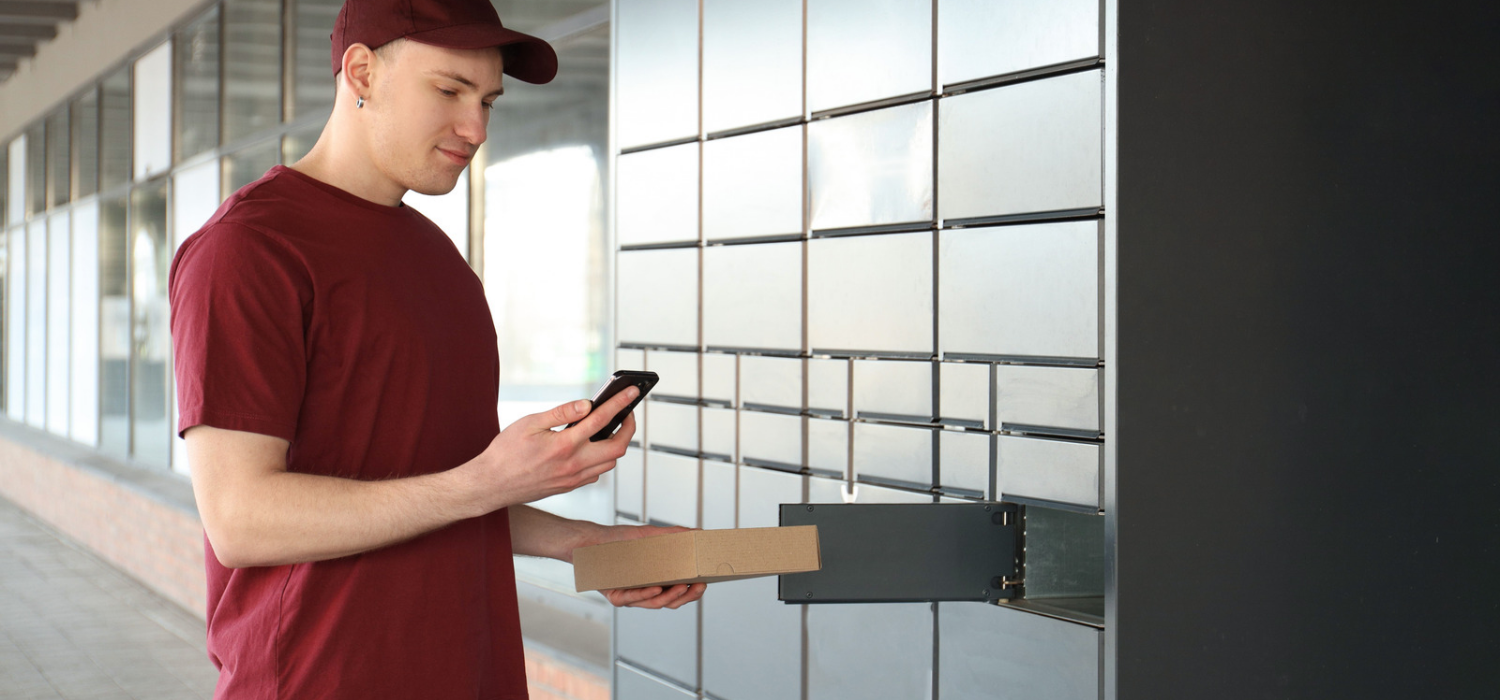
If the return becomes indispensable, however, it is necessary to ensure a return logistics chain that is as sustainable as possible. One plausible solution is Locker and Pick-up Points where a user can go to deliver the product without the courier picking it up directly at home.
If we also consider that more and more consumers are aware of the issue of environmental sustainability and that the majority of shoppers require flexible and alternative delivery and return methods, this solution certainly cannot be disregarded and the numbers prove it: 23% of consumers declared that they are willing to use Lockers and Pick-up Points to make their returns.
But how to integrate them into one’s eCommerce channel?
The new technology developed by GEL Proximity is the answer. GEL Proximity, in fact, is the platform that integrates thousands of proximity logistics solutions across the country, including for returns. Just open a user account on the platform to start using the service: customers simply enter their data on the dedicated page, choose the delivery point most convenient for them, print the label to be affixed to the parcel and proceed with the return.
For more information, contact us.