
eCommerce represents one of the main drivers of growth and innovation in Retail, so much so that according to estimates by the B2C eCommerce Observatory of the Politecnico di Milano, in 2021 the incidence of online sales channels on total Retail sales in the product component alone will reach 10% (one percentage point more than in 2020).
This means that the pandemic has irreversibly transformed the behaviour and preferences of consumers with respect to online purchases, “generating changes that are destined to take root and remain permanent,” reads the Observatory’s Research 2021. As many as 2 out of 5 people have increased their online shopping frequency, and so manufacturers, retailers and the entire retail sector have had to adapt, opening up new eCommerce channels and finding new omnichannel commerce solutions.
New consumer needs
As we have also reported here, the fashion industry is one of the product sectors contributing most to the growth of B2C eCommerce purchases (reaching EUR 30.5 billion in 2021).
But what do e-shoppers expect in the future?
1. Technological innovation
According to the recent research “The Customer Journey of Fashion and Lifestile products” published by Netcomm in collaboration with Veepee, technological innovation is one of the three areas in which consumers (around 40% of the sample analysed) expect most from brands.
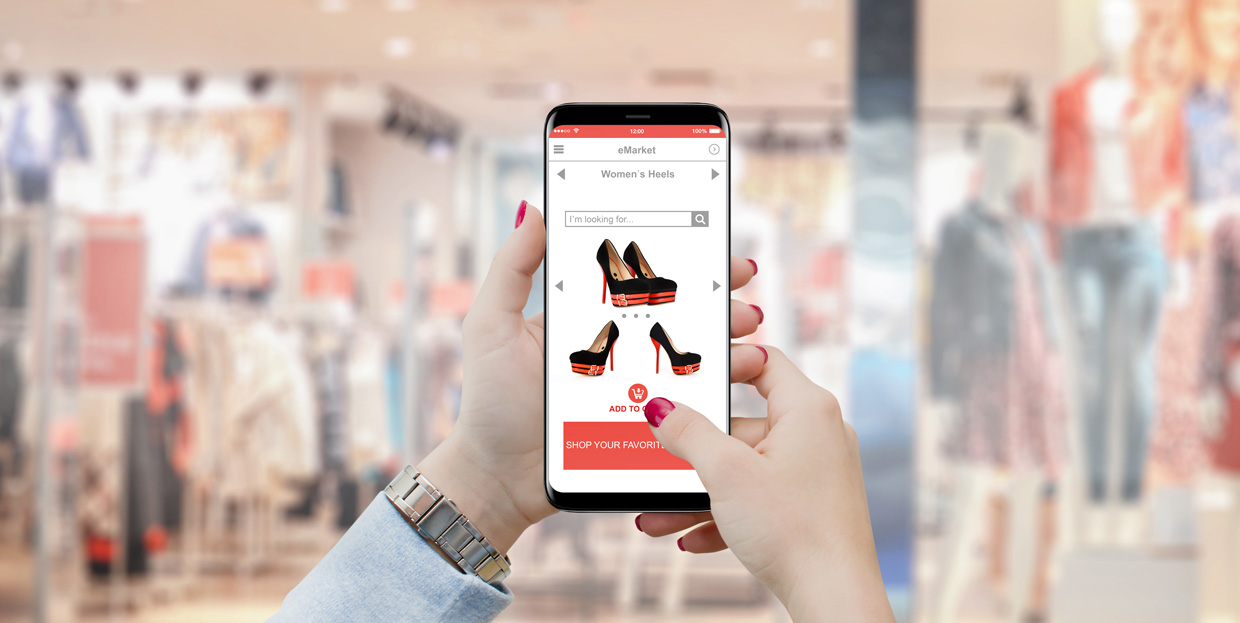
The interaction between the physical store and the digital store thus becomes an indispensable element in ensuring an optimal shopping experience and increasing sales. Consumers, in fact, expect to be able to try on garments virtually, thanks to augmented reality and so-called ‘virtual fitting rooms’, which make it possible to reduce the possibility of making a mistake when buying a garment and, therefore, also reduce returns.
And that is not all: the physical shop must also become digital, for example by offering the possibility of consulting online content in shop thanks to QR codes and interactive kiosks.
2. Quality of service
Simplicity and speed. These are the two major advantages of eCommerce over the retail channel that consumers cannot and no longer want to do without. Buying a product online, in fact, allows them to be able to receive it how and where they want it, with increasingly shorter delivery times and with minimal effort.
For this reason, it will be essential to work further on these aspects in the future in order to increase the quality of your service and ensure customer satisfaction (and therefore loyalty).
If you want to find out how you can improve your customers’ customer journey, we have talked about it here.
3. Sustainability and logistical innovation
47 per cent of consumers expect brands to innovate and implement sustainability in all aspects of the production and online purchasing process of a product.
A fundamental role will therefore be played not only by choices relating to the production and packaging of products (which we have also discussed here), but also those inherent to the delivery and shipping methods of orders, which must be, again according to the Netcomm/Veepee research, “increasingly environmentally friendly”.
According to 32% of consumers, in fact, innovations in the field of logistics will be crucial to ensure a better shopping experience. Alternative solutions such as click&collect (order online and pick up in shop) or, conversely, try in shop and receive the product at home, or even deliver products purchased online at Locker and Pick-up Points letting the user choose where and when to pick up the parcel according to his or her needs, are services that are now considered indispensable.
GEL Proximity at your service
A solution that integrates the needs of sustainability with those of greater flexibility is GEL Proximity, a platform that aggregates tens of thousands of Pick-up Points and Lockers throughout Italy, placing last-mile logistics at the centre of the customer’s shopping experience.
Thanks to GEL Proximity it is indeed possible to reduce both the costs and the environmental impact of shipping, increasing the turnover of eCommerce channels and improving the User Experience.
If you have an eCommerce channel and want to efficiently and effectively meet your customers’ expectations by offering them innovative and sustainable technological solutions, contact us here.