
During the Christmas season, when cities fill with lights and shop windows overflow with offers, buying gifts also becomes an act of responsibility.
In recent years, Italian consumers’ environmental awareness has grown significantly: more and more people are choosing to reduce the impact of their purchases, considering not only price or convenience but also how products are transported and delivered.
For anyone managing an eCommerce or working in logistics, this shift is far from marginal: it shapes customer expectations, influences purchasing decisions, and helps define new service standards.
Yet the same question keeps coming up: is it more sustainable to shop online or in-store? Despite widespread perceptions, neither option is inherently more virtuous. What truly makes the difference is the way the last mile is managed, the final leg of delivery, which today is the most critical in terms of emissions, operational costs, and urban congestion, especially during the peak season.
In this article, we break down how the last mile affects the sustainability of holiday shopping, comparing eCommerce and in-store purchases and explaining why solutions such as Lockers, Pickup Points, and more broadly Out of Home (OOH) delivery models are now among the most effective tools for reducing the environmental impact of deliveries. A crucial topic for eCommerce businesses, couriers, and logistics operators aiming to face the peak season with greater efficiency, fewer emissions, and lower costs.
Is it more sustainable to shop online or in-store?
For many years, online shopping was believed to be inherently less sustainable than traditional retail. That’s not entirely true. Numerous studies show that the comparison is far more nuanced.
In many scenarios, for example, online shopping can generate up to 30% less CO₂ than traditional trips to physical stores — thanks primarily to consolidated parcel deliveries.
Conversely, eCommerce becomes less efficient when deliveries follow door-to-door models, such as home delivery: failed delivery attempts, limited parcel consolidation, and additional kilometers driven to reach consumers’ homes all increase emissions and operational impacts.
The environmental impact of physical shopping
Offline shopping also carries significant environmental weight.
More than 65% of the footprint associated with traditional retail comes from individual travel — often by car — to and from stores. This becomes even more relevant during the Christmas period, when traffic flows rise, travel times increase, and urban congestion drives emissions even higher.
It’s therefore logical to conclude that sustainability does not depend on where people shop, but on how last-mile logistics is managed.
The last mile as a decisive factor: where delivery sustainability is truly determined
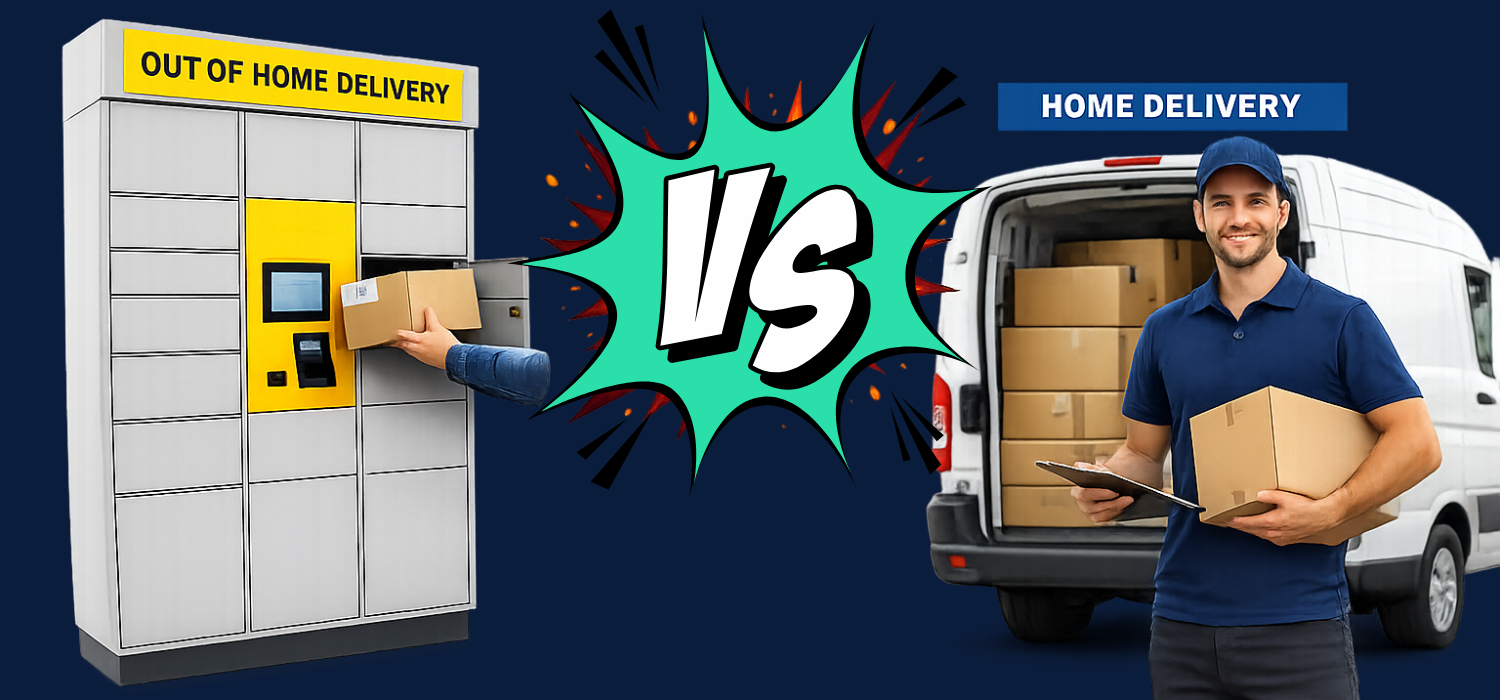
As mentioned earlier, the traditional home-delivery model — still the most common in Italy — has structural limitations that become critical during the peak season.
One major issue is failed first delivery attempts, which lead to repeated trips, added congestion, and higher emissions.
During the Christmas period, when volumes grow at double-digit rates, this results in:
- increased commercial traffic in urban areas
- inefficient delivery routes
- higher fuel consumption
- greater strain on couriers and logistics operators
As a result, overall sustainability and the competitiveness of eCommerce hinge on adopting a new operating model.
Consolidated delivery as a pathway to greener logistics
The concept of density delivery, i.e., the ability to consolidate multiple parcels in a single delivery point, is one of the key levers for reducing last-mile impact.
Consolidating volumes means fewer kilometers driven and better vehicle load optimization, with immediate benefits in terms of emissions and costs.
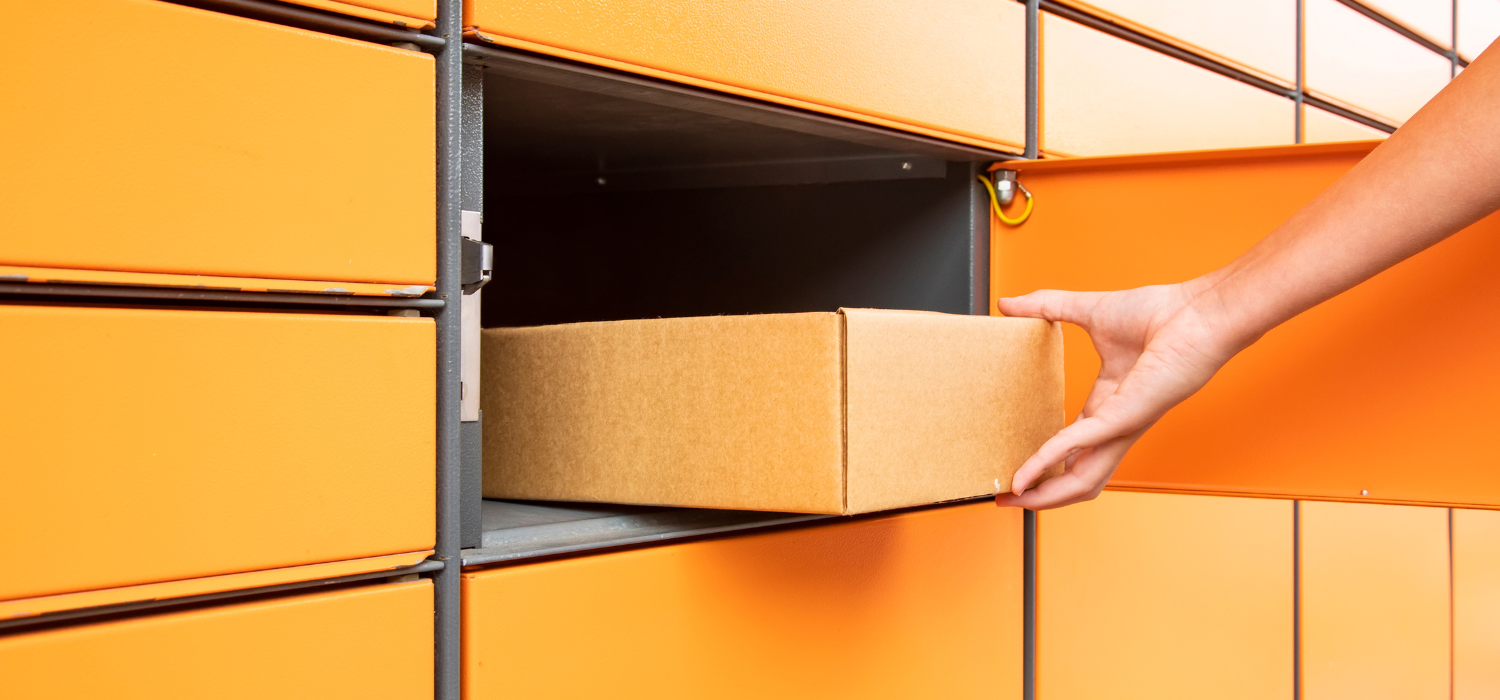
The most effective way to achieve this density is by shifting deliveries toward Out of Home solutions such as Lockers and Pickup Points.
Out of Home delivery as a sustainability driver
Pickup solutions enable couriers to make multiple deliveries in a single stop, significantly reducing last-mile emissions.
A second positive effect follows: consumers often collect their parcels while already on routine routes — commuting, grocery shopping, running errands — which further reduces the environmental footprint of their purchases.
Additionally, OOH models drastically reduce failed delivery attempts, extra courier trips, and overall urban freight congestion.
The result is a more sustainable, cost-effective, and reliable system for merchants and logistics providers, especially during the Christmas peak season.
From online to offline: consumers are choosing proximity
According to the IPC Cross-Border eCommerce Report 2024, more than 40% of European consumers have used a pickup point at least once for their online purchases. In mature markets such as France, Poland, and the Netherlands, penetration already exceeds 60%.
Italy is also experiencing rapid growth, supported by the expansion of 24/7 Lockers and by increased awareness of the economic, practical, and environmental advantages these solutions offer.
The holiday period — with its high logistical intensity — further accelerates the shift toward proximity-based delivery models, making Out of Home an increasingly natural choice for a growing number of users.
Why Out of Home is becoming strategic for eCommerce and logistics operators
For the eCommerce sector, adopting Lockers and Pickup Points enables more efficient last-mile management: costs decrease and deliveries become more punctual, with a positive impact on customer satisfaction and fewer complaints related to late or missed deliveries.
For logistics operators, the model offers equally strong advantages: it enables more rational routing, increases delivery density, and mitigates operational risks linked to seasonal peaks.
OOH is therefore not only an environmental opportunity but also an economic and competitive one — strengthening the entire last-mile value chain.
Technology as an enabler: the role of GEL
GEL Proximity provides the largest European network of Lockers and Pickup Points — over 500,000 active locations across Italy and Europe — easily integrable with any eCommerce, TMS, or WMS.
This extensive coverage allows merchants and couriers to:
- better distribute parcel volumes
- increase delivery density
- reduce emissions for the same number of parcels
- offer customers more sustainable and flexible delivery options
Simple integration, advanced orchestration: how eCommerce and logistics operators can adopt an OOH-first model
Thanks to a single API, GEL Proximity allows thousands of pickup points to be activated within minutes, integrating seamlessly with checkout systems, shipping platforms, and logistics infrastructures.
This technology is designed to transform the last-mile model and make it more resilient precisely when it is needed most: during the Christmas season.
Want to make your deliveries immediately more sustainable and efficient? Learn how to integrate Lockers and Pickup Points with GEL Proximity and take your last-mile logistics to the next level.
Contact us now for a personalized demo or more information.