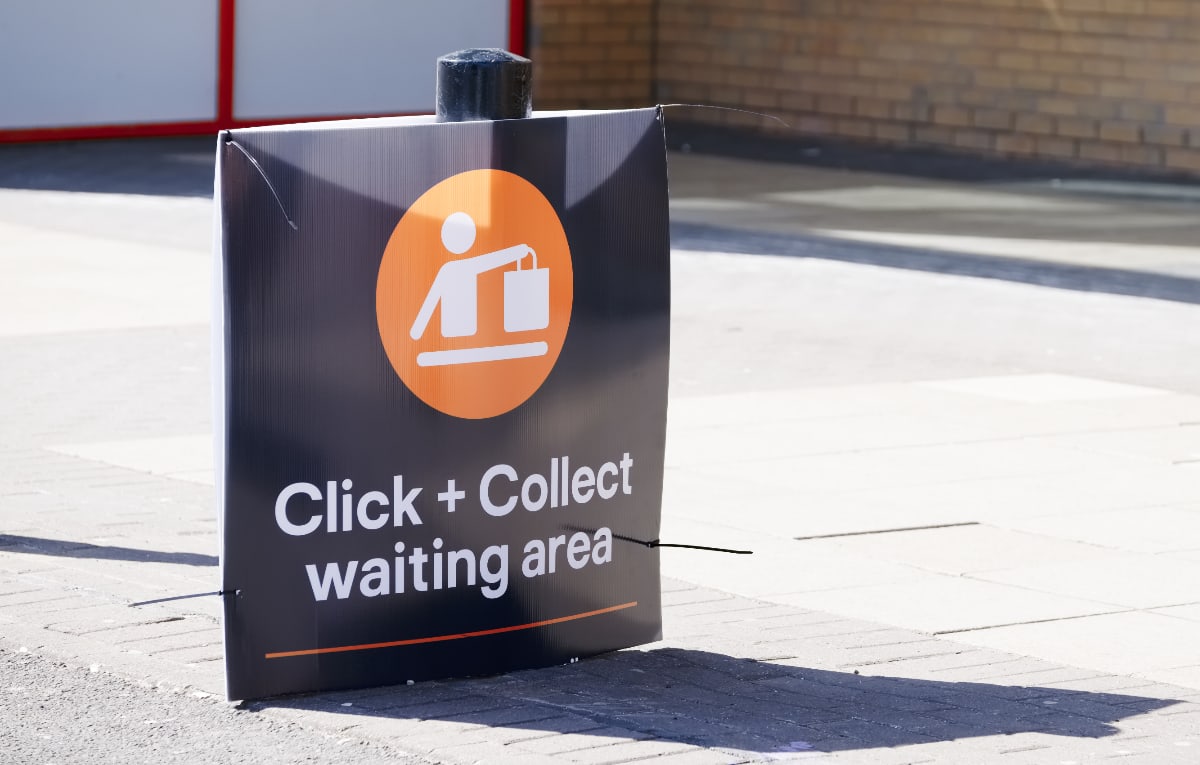

Click & Collect services are becoming more and more popular, so much so that according to a recent Istat survey during the first months of 2020 – also due to the pandemic and lockdowns – this purchasing method grew by as much as 349%.
It is in fact a relatively new service offered to consumers to collect goods previously ordered online. Yet, many people are still unfamiliar with it and, consequently, do not exploit its potential and advantages.
A definition
When we talk about Click & Collect, i.e. literally ‘order and collect’, we mean a system that allows the user to go and collect a purchase made online or deliver a return directly to the shop.
In other words, one makes one’s purchase conveniently online, via eCommerce channels, and then picks up ‘the bag’ in the shop, as in the more traditional retail store purchase formula.
The advantages
The advantages are obvious for both stores and end consumers.
The advantages for shops
Stores can better organise their stock and save on shipping costs while still maintaining a strong relationship between consumer and brand. In addition, for smaller shops it represents an opportunity to continue to be competitive with respect to large brands and large eCommerce outlets, which are often unable to offer this choice to customers who, as we have said many times, are increasingly attentive to sales channels that can offer innovative and diversified solutions for collecting goods.
Moreover, by doing so, the business can secure a greater influx of customers. A crucial factor if we consider that, according to research conducted by the trade association IMRG, 40 per cent of consumers habitually make a second purchase when entering a shop to collect an order via Click & Collect.
The benefits for consumers
Consumers, on the other hand, can choose the time that is most convenient for them to pick up or return goods, without having to adhere to the timing of couriers and home delivery and – above all – without delivery costs.
Advantages for the environment
Also not to be forgotten is the environmental benefit. By going directly to the shop, especially if you are already in transit, returning from work for example, you save in terms of CO2 emissions, since home delivery and last-mile logistics in general, as we have described here, have a strong impact on polluting emissions.
But how to ensure a quality Click & Collect service so that more and more users can take advantage of it?
Here are 5 practical tips to optimise your service
1. Offer the service for products whose preparation does not require too many steps. Excessively long waiting times for the collection of goods are counterproductive and contrary to the very concept of Click & Collect, which is based on simplicity and speed.
2. Check the stock on a daily basis and update it in real time, so as to avoid the risk of an online order being placed for a product for which you do not have immediate availability. In other words, the customer must always have real-time visibility of the stock.
3. Reduce lead times if and when possible. Customers require ever tighter time windows for order collection, which Click & Collect allows you to satisfy by making your customer satisfied (and therefore loyal).
4. Take advantage of the customer’s presence to up-sell, i.e. have additional products added to the purchase, thus improving your KPIs and also your turnover.
5. Make the shopping experience smart by alerting your customers when the order is ready to be picked.
Want to optimise your Click & Collect service and build your Proximity Network?
GEL Proximity’s technology is the only alternative to Home Delivery, merging Click & Collect pick-up services in proprietary shops with those of third-party Proximity Points.
If you have a Retail Network, you can upload your shops on the GEL Proximity map to offer your customers this service as a delivery option, but you can also disable a Proximity radius and enable other third-party Points of Proximity to cover areas of territory where your Retail Network is not present. You will then be able to create a customised logistics UX on your check-out by combining your retail network with the Pick-up Points and Lockers of the GEL Proximity network.
Start now! Contact us.