
For years, we have interpreted eCommerce as an extension of traditional retail — a digital space where people purchase products to conveniently receive them at home. Today, however, this vision is no longer enough to fully explain eCommerce.
The market continues to grow, but it is now entering a more mature phase in which competitive dynamics — and, above all, consumer expectations — are changing. In this context, there is a shift that may be less visible than the numbers, but far more profound: the transition from a model based on ownership to one based on access.
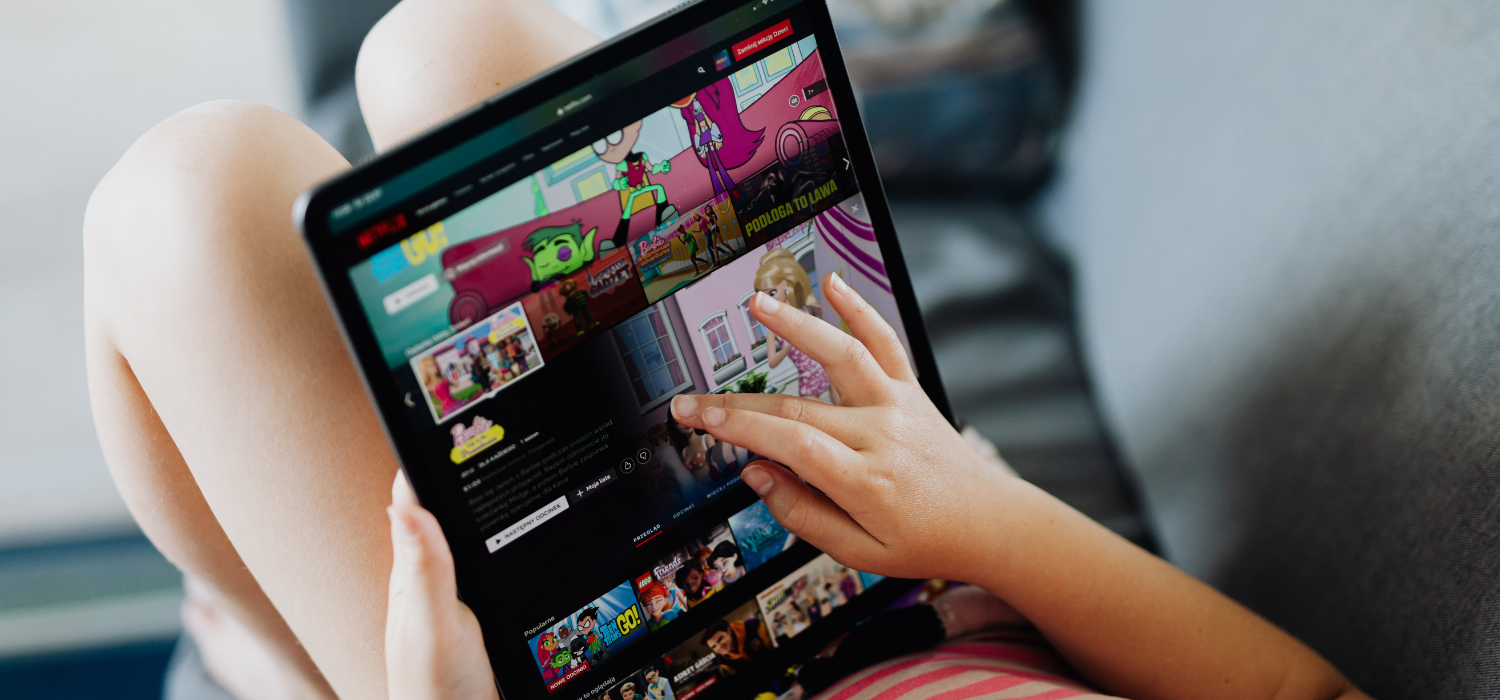
This is a transformation we have already witnessed across many other industries. Netflix replaced the DVD shelf, Spotify replaced CD collections, and car sharing challenged the idea of car ownership. Value no longer lies solely in possession, but in the ability to access a service exactly when needed. Today, this logic is also reshaping eCommerce logistics. It is no longer simply about “receiving an order,” but about being able to access a product in the most flexible way possible. And this is precisely where Pickup Points and Lockers are taking on an increasingly central role.
From Ownership to Access: How eCommerce and Consumer Behavior Are Changing
In recent years, the concept of ownership has progressively lost its centrality. We no longer own music — we stream it. We no longer own films — we watch them online. Increasingly, we do not even own cars, but rely on shared mobility services.
Value has shifted from the object itself to the ability to access it at the right moment and in the way that best fits our needs. This is a genuine cultural transformation, not just a technological one. It means prioritizing flexibility, immediacy, and control, reducing friction, and adapting services to people’s real lives — not the other way around.
New eCommerce Consumer Expectations: Flexibility, Autonomy, and Control
This shift has inevitably influenced the way people experience eCommerce as well. Online shopping is no longer an occasional event, but a recurring, everyday habit.
As a result, consumer expectations are changing too. People are becoming less tolerant of constraints and rigid processes, demanding greater autonomy in managing their purchases, and expecting increasingly seamless, simple, and predictable experiences.
This is exactly where logistics becomes central.
On-Demand eCommerce Delivery: How Customer Expectations Are Changing
Home Delivery: The Limits and Challenges of the Traditional Model
For a long time, home delivery was perceived as the ideal end point of the eCommerce experience. The promise was simple: shop online and conveniently receive everything at home. Today, however, that promise is beginning to show its limitations.
Home delivery involves a series of increasingly evident constraints: the need to be home when the courier arrives, inflexible delivery windows, and frequent failed delivery attempts. In a context where consumers’ daily schedules are becoming increasingly fragmented, these factors turn into significant sources of friction.
The Home Delivery Paradox
The result is a clear paradox: what was designed as a convenience solution risks becoming a source of inefficiency.
Waiting for a courier, rescheduling a delivery, or adapting one’s own schedule to the service are all elements that clash with the flexibility consumers now expect.
In other words, home delivery works perfectly only under ideal conditions: when the customer is available at the exact time of delivery. In reality, this condition is becoming increasingly rare.
eCommerce Logistics: Why Pickup Points Are Replacing Home Delivery
Why Choose Pickup Points: Benefits for Customers and eCommerce Businesses
It is within this context that Pickup Points and Lockers are emerging as a concrete solution to the limitations of traditional delivery. Their strength lies in the simplicity of the model: customers no longer need to adapt to delivery schedules — delivery adapts to customers’ needs.
Collecting an order whenever convenient, along an existing daily route, without time restrictions or the need to be present at home, transforms delivery into an asynchronous experience. A service that integrates into everyday life instead of interrupting it.
Pickup Points and Lockers: Why They Are Becoming the Preferred Delivery Method
Initially, these solutions were perceived by consumers as alternatives — often used only when home delivery created problems. Today, however, they are becoming an increasingly deliberate choice, to the point that they are now considered the preferred delivery method by a growing number of users, especially in urban areas and among frequent online shoppers.
The increase in purchase frequency is a key factor in understanding why the home delivery model is no longer sustainable: as consumers buy more often, it becomes increasingly inefficient for the system to manage every delivery as an isolated event.
Delivery must adapt to the rhythms of everyday life: hybrid work, constant movement, and variable schedules. Pickup Points and Lockers respond perfectly to this need by integrating into people’s existing routines — near home, near the workplace, and along habitual routes. They do not require customers to dedicate extra time to collection; they simply fit naturally into daily life.
Pickup Points and Lockers: The Role of Proximity Networks in eCommerce Logistics
For this model to work, one key element is essential: density. A widespread, accessible network integrated into the local territory is required. A network capable of reducing the distance between product and consumer, transforming delivery into an access point.
This is precisely where new logistics infrastructures are developing. Across Europe — and increasingly in Italy as well — Locker and Pickup Point networks are becoming true nodes of digital commerce.
Companies such as GEL Proximity represent a concrete example of this evolution: a network of over 500,000 Pickup Points and Lockers that makes product access closer, simpler, and more aligned with consumers’ daily habits.
Discover how GEL Proximity enables eCommerce deliveries and returns.
Benefits of Pickup Points for Logistics: Costs, Efficiency, and Last-Mile Delivery
Beyond the clear benefits for consumers, the model based on PUDO (Pick-Up Drop-Off) networks also has a significant impact on operational efficiency. Consolidating deliveries into specific locations reduces failed delivery attempts, optimizes distribution routes, and lowers the extremely high costs of last-mile logistics. In a market where margins are increasingly under pressure, these factors become decisive.
Sustainable Deliveries: How Lockers and PUDO Networks Reduce Environmental Impact
There is also another issue that cannot be ignored: sustainability.
Reducing door-to-door deliveries also means reducing urban traffic, emissions, and the overall environmental impact of logistics. This is no longer simply an ethical choice, but an increasingly important requirement — both from a regulatory perspective and from the standpoint of consumer expectations.
How to Optimize eCommerce Logistics: Practical Strategies for eCommerce Businesses
For eCommerce businesses, this new paradigm requires a shift in approach: it is no longer enough to “ship efficiently.” Delivery must be designed as an integral part of the shopping experience itself. In practical terms, this means acting on several key areas.
The first is expanding delivery options. Offering only home delivery is now limiting. Integrating Pickup Points and Lockers gives customers genuine choice while simultaneously increasing the likelihood of successful order completion.
The second concerns reducing last-mile inefficiencies. By consolidating deliveries into proximity locations, businesses can reduce failed attempts, optimize routes, and contain operational costs, with a direct impact on profitability.
The third is returns management. Making the returns process simple and accessible — for example, through a widespread Pickup Point network — is not only an operational advantage, but also a factor that influences trust and purchase intent.
Finally, there is the issue of positioning. Offering flexible delivery methods means aligning with the expectations created by marketplaces and improving the overall quality of the customer experience.
In this way, delivery stops being the final stage of the process and becomes one of the main points of contact with the customer — a moment that can generate either value or friction, and which increasingly determines the perception of the service itself.
Discover how to integrate Out-of-Home solutions into your logistics strategy with GEL Proximity.