
With the launch of Amazon Now, Amazon continues to invest in ultra-fast delivery, confirming that speed remains one of the key competitive factors in the eCommerce industry.
Receiving an order within just a few hours is undoubtedly an advantage for certain product categories and specific purchasing needs. But this push towards ever-faster deliveries raises a broader question: is speed really what consumers value most today?
In recent years, customer expectations have evolved. Today, it is no longer just about receiving an order as quickly as possible, but also about being able to choose where to collect it, when to do so, and through which delivery method.
Taking Amazon Now as a starting point, we explore why ultra-fast delivery represents an important evolution in eCommerce, but also why the real challenge for retailers and logistics operators lies in offering a delivery experience that can adapt to the needs of every consumer.
What is Amazon Now?
Amazon Now is Amazon’s new service designed to provide ultra-fast delivery for a selection of products, further reducing the time between placing an order and receiving it.
The goal is to address situations where immediacy provides real added value: an urgently needed item, a last-minute purchase, or an everyday product that customers want to receive as quickly as possible.
This development confirms a trend that has shaped eCommerce for years: increasing investment in reducing delivery times. But is faster delivery alone enough to truly improve the customer experience?
Speed still matters, but it is no longer the only priority
The launch of Amazon Now confirms that there is real demand for increasingly fast deliveries. For certain product categories and specific purchasing situations, receiving an order within just a few hours provides tangible value and can be an important differentiating factor.
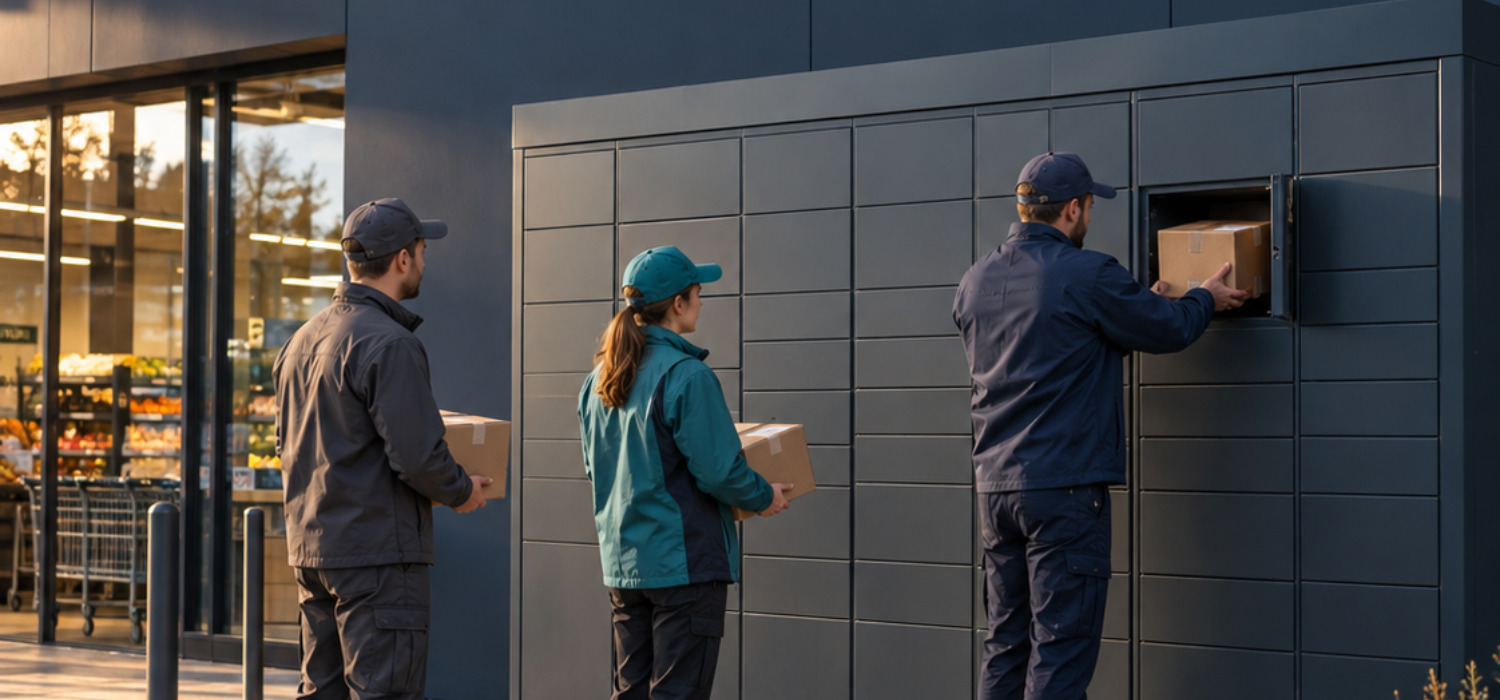
At the same time, however, evolving consumer expectations reveal a more complex picture. For most online purchases, delivery time is only one of the factors influencing the quality of the overall experience. More and more customers want to be able to choose the delivery option that best fits their habits: whether to receive a parcel at home, collect it from a parcel locker near their workplace, stop by a pick-up point during their daily commute, or schedule delivery for the most convenient time.
In this sense, Amazon Now should not necessarily be seen as the new standard for eCommerce, but rather as a response to one of the many needs consumers may have. Alongside speed, flexibility, convenience, and the ability to choose how to receive an order are becoming increasingly important.
In many cases, for example, next-day delivery to an easily accessible pick-up point may be more convenient than delivery within a few hours if the latter requires the recipient to be at home.
The quality of the delivery experience therefore depends on striking the right balance between speed, flexibility, and choice.
The real goal of eCommerce is to reduce friction
As we also explored in our article on Google Universal Cart, delivering an effective shopping experience means removing friction throughout the entire customer journey, rather than simply speeding up one stage of the process.
Delivery is one of the final touchpoints between a retailer and a consumer, but it is also one of the most critical.
Ultra-fast delivery loses some of its value if the customer is not available when the courier arrives, if they have to reschedule the delivery, or if collecting the parcel proves inconvenient. By contrast, offering multiple delivery options makes it possible to adapt the service to consumers’ needs, reducing obstacles and improving the overall shopping experience.
Speed can certainly help reduce some friction, but giving customers the freedom to choose how they receive their orders can eliminate many other sources of friction.
Speed and flexibility are not competing alternatives in eCommerce delivery
Treating ultra-fast delivery and Out-of-Home networks as two opposing models risks oversimplifying the debate. In reality, they address different needs and, for precisely this reason, can coexist within the same logistics strategy.
There will always be purchases for which receiving a product as quickly as possible is the top priority. For many others, however, the real value lies in being able to choose the most convenient delivery location, collect a parcel whenever it suits the customer, or avoid the risk of a failed delivery.
The goal, therefore, should not be to identify a single winning model, but to offer consumers the solution that best fits each specific need.
How GEL Proximity expands eCommerce delivery options
If customer experience is not determined by speed alone, offering consumers an increasingly wide range of delivery options becomes essential.
This is precisely the philosophy behind GEL Proximity. Through a single integration, retailers, marketplaces, and logistics operators can access more than 1,000,000 parcel lockers and pick-up points worldwide, connecting networks from different operators within a single interoperable ecosystem.
This makes it possible to expand the range of options available at checkout, offering delivery methods that adapt to customers’ habits and preferences rather than forcing customers to adapt to a single solution.
In a market where consumer expectations continue to evolve, competitiveness will depend not only on delivery speed, but on the ability to offer the right option at the right time.
Ultra-fast delivery is certainly one of the most interesting developments in eCommerce and will continue to play an important role for many types of purchases. But the future of logistics does not necessarily belong to whoever delivers the fastest. Instead, it may belong to those who can provide a smarter, more flexible, and more personalised delivery experience.
Ultimately, today more than ever, true innovation is not simply about reducing waiting times, but about allowing every consumer to receive their order in the way they prefer. In other words, the best delivery is not always the fastest one.
Giving customers the ability to choose from millions of pick-up points and parcel lockers means building a more flexible, efficient delivery experience that reflects consumers’ real needs. With GEL Proximity, retailers and logistics operators can access more than 1,000,000 Out-of-Home points through a single integration, expanding the options available to customers and turning delivery into a genuine competitive advantage.
What are you waiting for? Contact us today for a personalised demo.