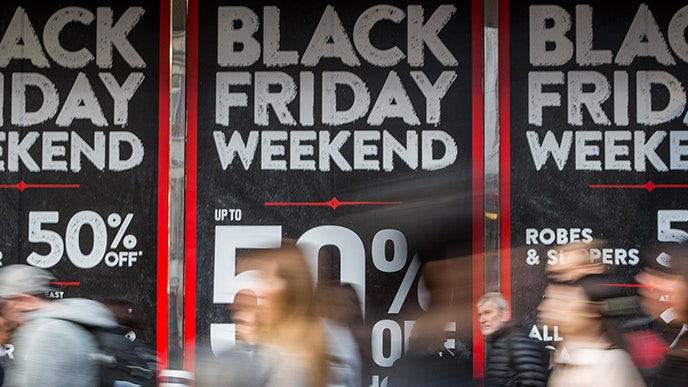

Black Friday and Cyber Monday are just around the corner, and with the Christmas season fast approaching, logistics are preparing for a major test in which they will inevitably be under great stress.
Expectations for Black Friday 2021
According to research conducted by PwC, this year 85% of Italians (4 out of 5) would be interested in shopping during the ‘black weekend’ of shopping scheduled between 26 and 29 November. Of these, 41% say they would only be willing to place orders online in the event of very advantageous offers, while 45% say they would shop with certainty.
Furthermore, 16% of Italians who will take advantage of the so-called ‘Black Friday’ offers will take the opportunity to get ahead with Christmas presents for friends and relatives.
According to forecasts, the spending of Italian e-shoppers during Black Friday 2021 will increase compared to previous years. The average receipt will in fact be between EUR 235 (PwC data) and EUR 273 (Idealo data), while 45.1% expect to spend between EUR 50 and EUR 200 online. In 2020, the average per capita expenditure stood at EUR 157.
The consumer identikit
Men will spend more, with an average budget of EUR 294 per person compared to EUR 240 for women. The average age of those who spend more online is also rising: adults between the ages of 55 and 64 will spend an average of €356, while young people will stop at €212.
Top selling products
Consumer electronics, clothing, household items, health and beauty articles and books will be the best-selling products on Black Friday 2021.
Almost 50 per cent of Italian e-shoppers will take advantage of the coming days’ offers to buy electronic and tech products and even expect to spend more than last year, while three out of ten Italians (31 per cent) plan to spend more on clothes, shoes and accessories.
Shopping patterns
The Black Friday tradition has now spread widely both online and in physical shops, yet despite the reopening of businesses after the pandemic-related closures and the easing of restrictions to contain Covid-19, Italians continue to prefer eCommerce sites for their shopping: more than half of consumers (53%) prefer the big giants and marketplaces, a third (32%) aggregator websites, while only a quarter (26%) browse the website of a specific brand.
Logistics under stress
Numbers in hand, therefore, the ‘black month’ of online shopping and the concomitance with the pre-Christmas period represent a reason for great stress for the entire logistics chain called upon to respond to the needs of the millions of consumers who expect to receive their orders directly at home in the shortest possible time.
This is what is known as ‘whim logistics’, which reaches its peak at times like these with major repercussions on environmental sustainability as well. According to the Dirty Delivery Report 2020 study, 429,000 tonnes of C02 were emitted by the delivery of millions of parcels on Black Friday alone last year in every western country. To put it bluntly, the figure is equivalent to 435 Rome-New York flights.
Yet, there is an increasing focus on sustainability among consumers, which is estimated to impact the purchasing behaviour of at least nine out of ten Italians (90%). Despite this figure, however, again according to the PwC report, the preferred delivery method for Black Friday by Italians remains home delivery (over 58%), with a considerable gap compared to alternative delivery methods such as, for example, Click&Collect (8%).
So how can the stress to which logistics is subjected during this period be alleviated?
Favouring alternative and less environmentally and socially impactful delivery methods is a solution both consumers and eCommerce sites should increasingly consider for the delivery of online orders.
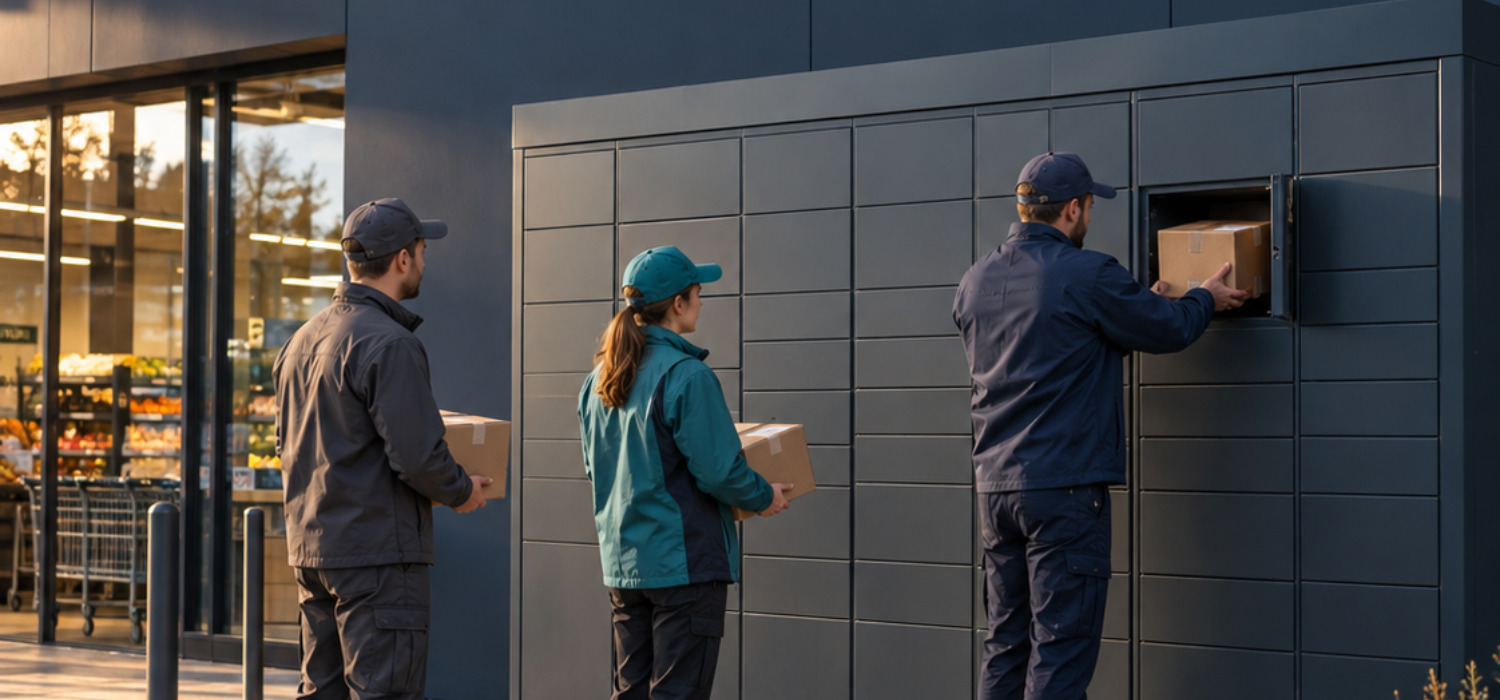
For example, favouring the use of Locker and Pick-up Points allows 100% delivery with fewer trips, thereby also reducing eCommerce-related pollutant emissions and delivery costs.
We also talked here about solutions that consumers and logistics service providers can implement to make eCommerce and, in particular, the last mile more sustainable.
For its part, GEL Proximity offers an innovative and sustainable solution by aggregating the networks of Pick-up Points and Lockers in Italy for both deliveries and returns to the benefit of all: eCommerce, consumers and the environment.
If you are interested in finding out more about our technology and how to implement it in your eCommerce channel, contact us now.