
The constant growth of the eCommerce market is by now a sure fact, so much so that, as we have also reported here anticipating the trends and expectations for the sector in 2022, according to a recent survey by eMarketer, e-commerce will reach $5 trillion by the end of this year.
Taking only the Italian market into consideration, for example, digital commerce is worth EUR 39.4 billion, according to data from the eCommerce B2c Observatory of the Politecnico di Milano.
But what is the impact of the eCommerce boom (and pandemic) on logistics companies?
Geotab, a global leader in IoT and connected vehicles, recently presented the results of a research conducted by Eumetra on a sample of 150 Italian companies operating in the eCommerce and logistics sector, to analyse the trend of deliveries following the pandemic and to understand what solutions can be implemented to optimise last mile logistics and respond to the increasing demands and expectations of consumers.
The research showed that almost all of the sample analysed (95%) agreed that the increase in eCommerce following the spread of Covid-19 has had an overall positive impact on their company.
More specifically, almost 6 out of 10 (57%) estimate that they have achieved an increase in deliveries of between 20% and 40%, while more than a third (35%) claim this between 40% and 60%.
Furthermore, 1 in 3 companies (34%) believe that eCommerce is set to grow further across all product categories, but there are also those who expect the clothing (38%) and food (23%) sectors to drive performance in the near future, followed by consumer electronics (28%) and personal care products (11%).
In fact, as we anticipated in this article on e-Grocery trends, the food sector has exceeded EUR 4 billion in value in Italy (data from Netcomm-Politecnico di Milano).
Challenges for the logistics sector
All this, however, also translates into an increase in complexity for companies that face major logistical challenges in responding to the increase in delivery volumes and the demand for capillary and geographically dispersed distribution.
Punctuality and capillarity: how deliveries are changing
The new dynamics are therefore reflected first and foremost in logistical organisation, not only because it has become necessary to reach more distant destinations (as reported by 21% of respondents), but above all because deliveries are proving to be increasingly fragmented and spread across the territory (70%). In addition, consumers are proving increasingly demanding, so much so that specific requests in terms of timetables, punctuality or delivery to the floor are becoming more common.
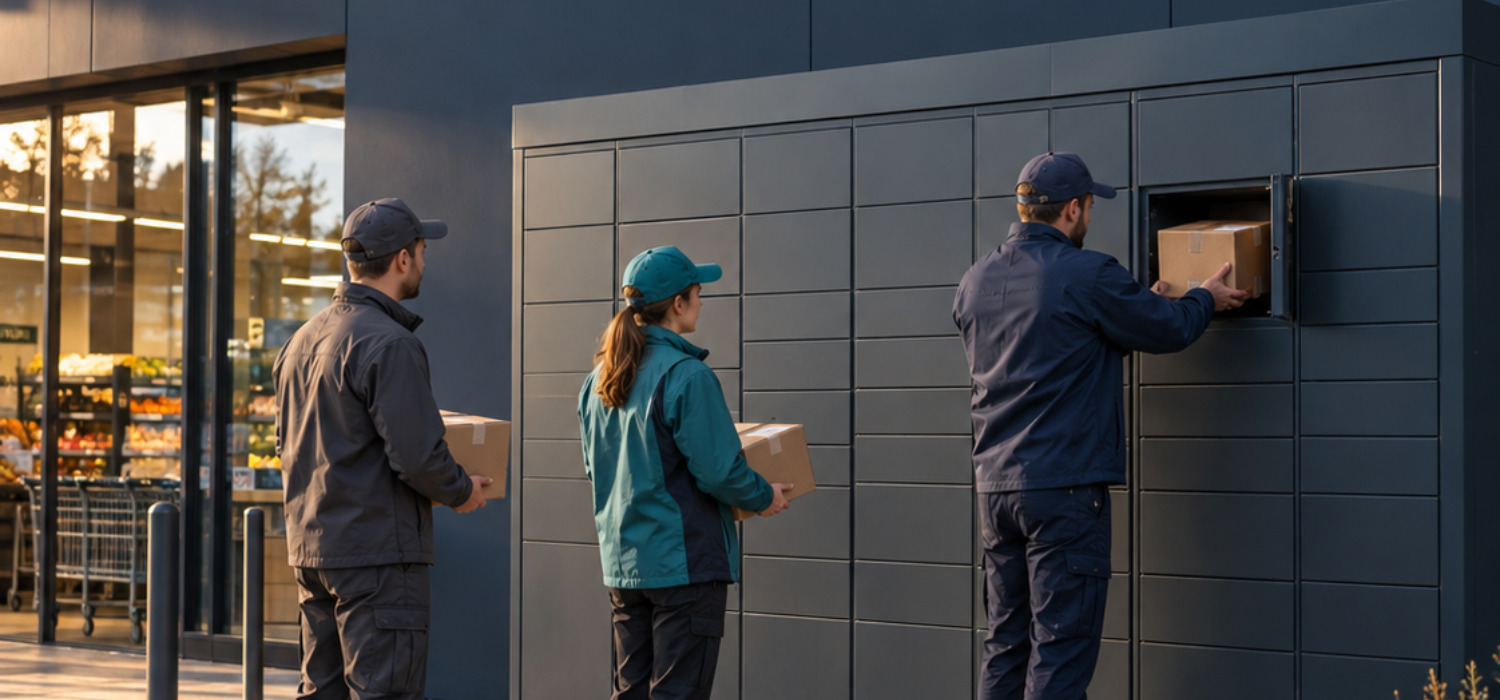
In this respect, a viable (and sustainable) solution is Locker and Pick-up Points for eCommerce, which can offer not only greater flexibility in deliveries, thus satisfying customer demands, but also optimising fleet trips and ensuring 100% delivery.
Optimising last mile delivery: the key to success
Evolving end-user demands therefore call for a renewal of the approach to last mile management that can be implemented by exploiting the advantages offered by telematics in terms of optimising fleet performance.
Increasingly stringent standards can only be met by state-of-the-art delivery systems.
However, despite this awareness (82% of the sample recognise that fleet management software is helpful in increasing the efficiency of last mile delivery, while digitising processes and speeding up schedules are priorities for 58% and 43% of respondents respectively), in Italy only 2 out of 3 companies (66%) today have a telematics solution for fleet management.
GEL Proximity offers the possibility to use, thanks to a single integration, over 45,000 automated Pick-Up Points and Lockers throughout Italy, facilitating digital innovation and supporting Last-Mile Logistics in the eCommerce era.
Discover our plans or contact us for more information now.