
The Out-of-Home Delivery (OOH) model is no longer simply an alternative to home delivery: it has become a strategic pillar of eCommerce logistics. The rapid growth of parcel lockers, PUDOs (Pick-Up and Drop-Off Points), and proximity networks is reshaping how deliveries, returns, and peer-to-peer shipments are managed, meeting the evolving needs of consumers, retailers, and logistics operators.
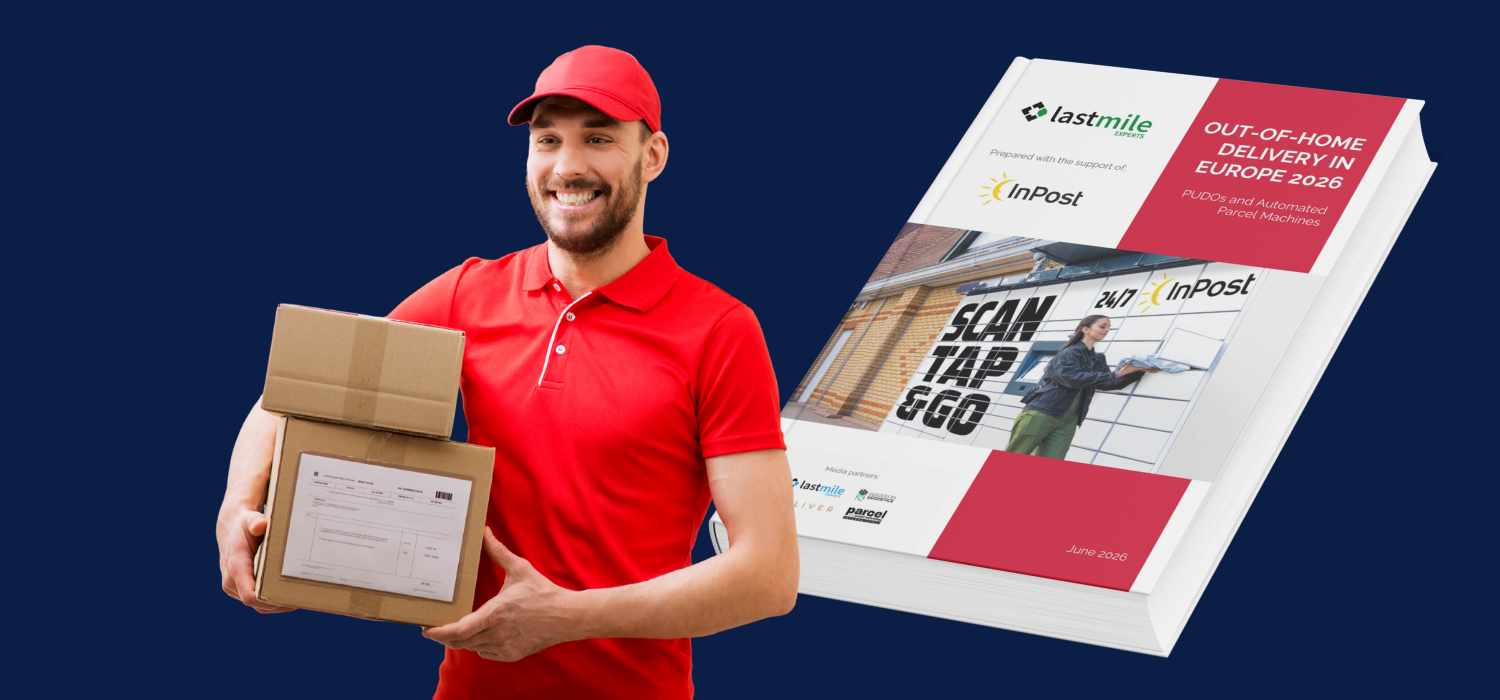
This trend is highlighted in the latest edition of Last Mile Experts’ Out-of-Home Delivery in Europe – PUDOs and Automated Parcel Machines report, which paints the picture of a European market undergoing significant transformation. While recent years have been characterized by the rapid expansion of OOH networks, today’s true competitive advantage lies elsewhere: building efficient proximity infrastructure that is seamlessly integrated into local communities and genuinely valuable for online shoppers.
In this article, we explore the report’s key findings and examine why Out-of-Home Delivery is set to become one of the cornerstones of last-mile logistics in the years ahead.
What Is Out-of-Home Delivery and Why Is It Growing?
Out-of-Home Delivery encompasses all delivery methods that allow consumers to collect or ship parcels from a location other than their home. This includes parcel lockers, PUDOs (Pick-Up and Drop-Off Points), retail-based proximity networks, and shared collection points operated by multiple logistics providers.
In recent years, this delivery model has taken on an increasingly important role in last-mile logistics because it creates value for every stakeholder in the supply chain. Consumers benefit from greater flexibility when collecting parcels; logistics operators can reduce failed delivery attempts, optimize courier routes, and improve productivity; and eCommerce businesses gain an opportunity to enhance the customer experience, reduce logistics costs, and provide a more sustainable delivery service.
Market data confirms this evolution. According to the Last Mile Experts report, the European courier market has surpassed 21 billion parcel shipments, while eCommerce continues to be the sector’s primary growth driver. At the same time, consumer preference for out-of-home delivery solutions continues to increase, making them an increasingly permanent feature of Europe’s logistics landscape.
Why the Evolution of eCommerce Is Making Out-of-Home Delivery a Strategic Priority
1. Marketplaces, Re-commerce, and Returns Are Transforming eCommerce Logistics
For many years, eCommerce logistics followed a relatively straightforward model: a product left a retailer’s warehouse and was delivered directly to the end customer. Today, that model no longer reflects reality.
An increasing share of purchases now takes place through marketplaces, recommerce platforms, and consumer-to-consumer (C2C) channels, while returns have become an integral part of the shopping experience. The same product may be purchased, returned, resold, and shipped multiple times throughout its lifecycle, generating logistics flows that are significantly more fragmented than in the past.
More than growing parcel volumes, it is this transformation that is making proximity networks increasingly strategic. According to the Out-of-Home Delivery in Europe 2026 report, 72% of European online shoppers buy or sell products through C2C platforms, and nearly one in two does so at least once a month. This shift clearly demonstrates that logistics is no longer limited to managing deliveries from retailers to consumers, but must increasingly support a distributed network of exchanges involving businesses, marketplaces, and private individuals.
In this environment, competitiveness depends not only on delivery speed but also on the ability to provide convenient collection and shipping locations that adapt to new purchasing behaviors while simplifying every stage of the parcel journey.
2. Today, Network Quality Matters More Than the Number of Parcel Lockers
The growth of Out-of-Home Delivery can no longer be measured solely by the number of parcel lockers installed. As eCommerce logistics evolves, the quality of networks, their geographic coverage, and their ability to meet the needs of both consumers and logistics providers have become increasingly important.
The 2026 edition of the Last Mile Experts report introduces the concept of Unique Locations, moving beyond simply counting the collection points operated by individual providers to measure the actual availability of delivery infrastructure across a territory. This marks an important shift in perspective: what matters is no longer just the size of a network, but how accessible it truly is for consumers, retailers, and couriers.
In other words, two networks with the same number of collection points can deliver entirely different customer experiences. The difference lies in geographic distribution, proximity to everyday destinations, and the ability to intercept real consumer mobility patterns. A locker installed in a strategic location—easily accessible during a daily commute or within a shopping area—creates significantly more value than infrastructure placed in an isolated or inconvenient location.
This is why the European conversation is shifting from quantity to quality. The future competitiveness of Out-of-Home Delivery will no longer depend on the number of installations, but on the ability to build proximity infrastructure that is genuinely integrated into both local communities and consumers’ daily shopping habits.
3. Proximity Logistics Is the Real Competitive Advantage of Out-of-Home Delivery
Let’s take this one step further. As parcel journeys become increasingly complex, simply increasing the number of collection points is no longer enough. The real challenge is building networks that become part of people’s everyday routines.
Proximity means much more than having a parcel locker close to home. It means being able to collect or ship a parcel while carrying out everyday activities, without having to change established routines. A collection point located near a supermarket, railway station, or shopping center does more than improve the customer experience—it also makes the entire logistics chain more efficient.
This is precisely the point emphasized in the 2026 Last Mile Experts report. A well-designed proximity network reduces failed delivery attempts, optimizes courier routes, lowers last-mile emissions, and helps reduce operating costs. These benefits extend across the entire supply chain, from logistics providers and retailers to end consumers.
The future of last-mile logistics will therefore be defined by increasingly intelligent networks, integrated with dynamic capacity management systems, artificial intelligence, and shared infrastructure operated by multiple logistics providers. Competitive advantage will depend not only on physical presence but also on the ability to deliver a seamless experience throughout the entire parcel journey.
GEL Proximity Recognized Among Europe’s Leading Operators in the Last Mile Experts Report
Among the leading European operators featured in the Last Mile Experts report is GEL Proximity.
GEL Proximity’s inclusion in the report represents much more than a simple mention. Being featured in this comprehensive overview of the European market means being recognized as one of the networks and operators contributing to the evolution of Out-of-Home Delivery, with its reach, capabilities, and role in advancing the sector being evaluated alongside other key industry players.
For GEL Proximity, this recognition confirms a strategy built around proximity logistics: a network providing access to more than 1.000.000 PUDOs and parcel lockers across Europe, designed to make parcel collection and shipping easier for consumers while increasing efficiency for logistics operators and eCommerce businesses.
Out-of-Home Delivery is becoming increasingly strategic for the competitiveness of last-mile logistics.
Contact the GEL Proximity team to discover how you can integrate a proximity network into your delivery solutions.