
For years, eCommerce pursued a single promise: delivering everything as fast as possible.
First came next-day delivery, then same-day delivery. Over the past few years, the entire eCommerce ecosystem has progressively turned speed into one of the main competitive factors in digital retail, pushing the concept to the extreme with quick commerce. Competition focused on reducing waiting times and promising ever-faster deliveries, but today something is changing.
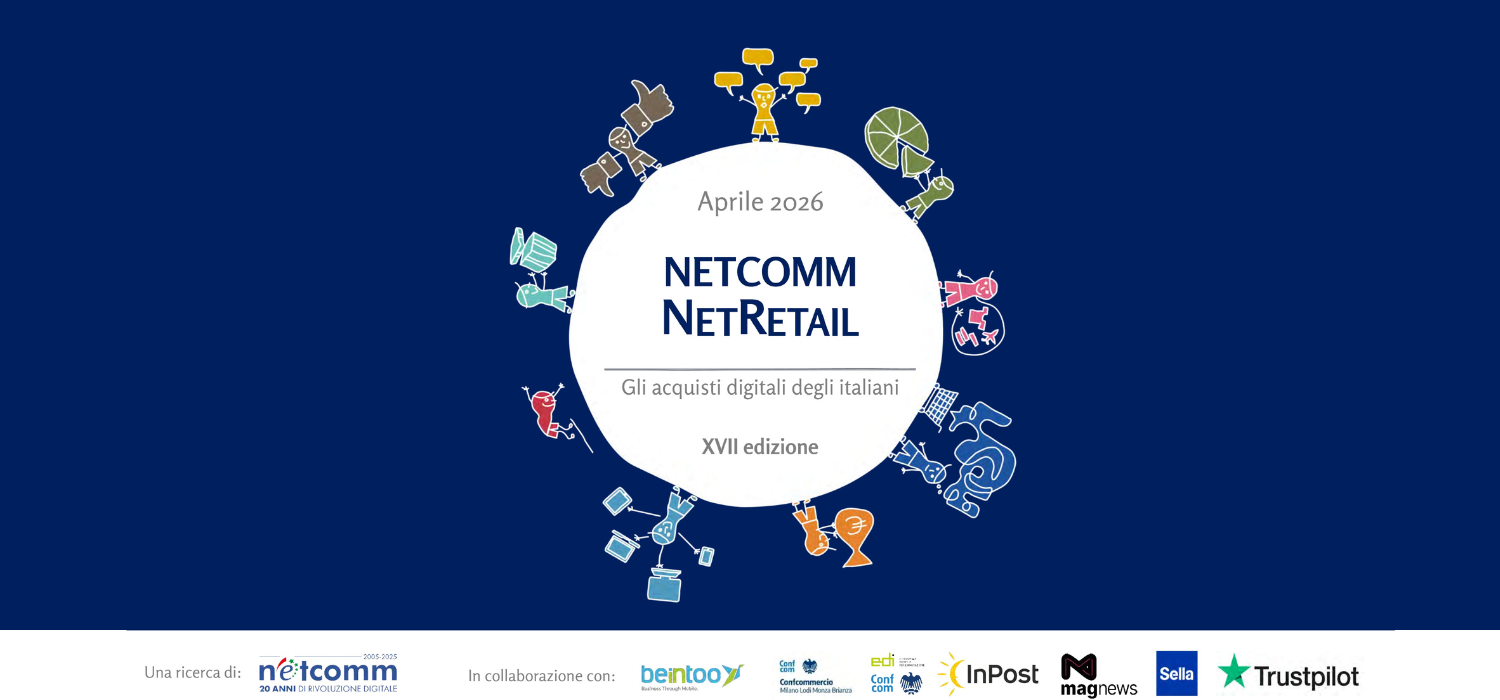
The NetRetail 2026 report, presented by Consorzio Netcomm during the Netcomm Forum 2026, highlights a much deeper evolution than the simple growth of online shopping: it shows how the Italian digital consumer has become more mature, more aware, and above all more demanding in managing their shopping experience. The digital consumer of 2026 is looking for an experience that is smoother, more controllable, and above all more compatible with everyday life.
And in this new scenario, speed alone is no longer enough. The real demand emerging from the market is something else: flexibility.
This is where the concept of “smart delivery” takes shape, with Out-Of-Home delivery no longer being just a logistics alternative, but becoming a concrete response to new consumer behaviors.
GEL Proximity analyzed the data from the NetRetail 2026 report to understand how Italian consumers’ expectations around deliveries and returns are changing, and why PUDO points and Lockers are now a strategic component of so-called “smart delivery”.
NetRetail 2026: Italian eCommerce Enters Its Mature Phase
The Italian digital retail market is now mature. Online shoppers in Italy have reached 35 million, while the total value of online purchases is expected to approach €91.5 billion during 2026. Today, around 10% of Italian household spending goes through eCommerce.
However, the most interesting insight from the NetRetail 2026 report is not so much the market growth itself, but the transformation of the consumer profile. The average age of online shoppers has reached 48 and is now essentially aligned with the average age of the Italian population. This means that eCommerce is no longer a behavior associated with younger or particularly digital-savvy demographics, but has become a cross-generational habit integrated into the everyday lives of millions of people.
And it is precisely this normalization of online shopping that has changed consumer expectations. When eCommerce was still perceived as a novelty, speed represented innovation. Today, however, users think in a much more pragmatic way. They want an experience that is simple, predictable, and compatible with increasingly fragmented lifestyles.
In other words, today’s Italian digital consumer is not necessarily looking for the fastest possible delivery, but for the smartest one.
How PUDO and Lockers Are Changing Delivery
There is a passage in the introductory commentary of the NetRetail 2026 report by Netcomm President Roberto Liscia that perfectly summarizes the transformation currently taking place in digital retail: “the use of alternatives to home delivery is increasing, signaling a growing need for flexibility and a transformation of logistics models.”
While in the past eCommerce focused almost exclusively on speed, reducing delivery times to improve customer experience, consumers today seem to place increasing value on another factor: freedom of choice.
Daily life has become more fragmented, chaotic, and unpredictable. Hybrid work has changed domestic habits, commuting patterns are less regular, and organizing one’s day around the arrival of a courier is becoming increasingly incompatible with people’s real routines. In this scenario, home delivery is not always the most convenient solution. In many cases, it risks becoming yet another constraint.
The answer lies in Out-Of-Home delivery. PUDO points and Lockers are tools that allow consumers to regain control of their shopping experience by choosing to pick up an order while returning home from work, during errands, or at the most convenient time of day. This allows consumers to integrate eCommerce into their daily lives instead of adapting their daily lives to eCommerce.
It is no coincidence that “over the last ten years,” the report states, “deliveries of online purchases to third-party addresses (not merchant stores) have increased more than tenfold, and it is estimated that around 9 million parcels were delivered to third-party locations (pickup points) in 2025.”
Out-Of-Home Delivery Numbers in Italy
According to NetRetail 2026 data, 21.9% of products purchased online are now collected through alternatives to home delivery. More specifically, 12% of purchases are collected at pickup points, while 5.4% are delivered through Lockers.
These figures show that Locker deliveries have grown so significantly in recent years that they have surpassed collections at merchant stores (4.5%).
And that’s not all: in the metropolitan area of Milan, Monza Brianza, and Lodi — a case study featured in the Netcomm Report — Out-Of-Home collection reaches as much as 25.2% of online purchases, with a particularly strong preference for Lockers. This is likely a signal of the future evolution of the entire Italian market: the more widespread Out-Of-Home networks become, the more consumer habits change.
The Real eCommerce Competition Now Happens After Checkout
NetRetail 2026 also points to another strategic shift: in a mature market, true competitive differentiation is no longer built only during customer acquisition, but increasingly within the post-purchase experience.
For years, the sector focused mainly on advertising, customer journeys, comparison tools, personalization, and AI solutions. But today, with 35 million Italians shopping online and over 24 million frequent buyers, eCommerce has become an everyday normality.
And it is precisely when purchases become frequent that the quality of the logistics experience takes on a decisive role in the overall perception of the service. Flexible deliveries, easy returns, the possibility to choose more convenient pickup methods, and greater autonomy in post-sales management directly impact customer satisfaction and loyalty.
Logistics, therefore, is no longer an invisible function. It is becoming a central part of the relationship between brands and consumers.
The Future of Retail Will Increasingly Be About “Delivery Experience”
For years, delivery was considered simply the final stage of the purchase process. Today, however, it is becoming one of the most delicate moments in the entire relationship between brands and consumers.
NetRetail 2026 perfectly captures the current landscape: a larger, more mature Italian eCommerce market that is increasingly integrated into people’s daily lives, where consumers no longer evaluate only products and prices, but also want to choose how they experience every stage of the purchasing journey, including delivery. Deliveries and returns are therefore no longer purely operational elements, but strategic drivers of customer loyalty. And this is precisely why Out-Of-Home delivery is expected to continue growing in the coming years.
A smart delivery model is no longer based solely on speed, but on the ability to adapt to people’s lives and needs — in other words, to your customers. The future of eCommerce will not depend only on who sells better online, but on who can build smarter, omnichannel post-purchase experiences that are closer to people’s real needs.
And it is precisely in this context that widespread PUDO and Locker networks such as those enabled by GEL Proximity (with more than 500,000 PUDO points and Lockers already active nationally and internationally) are becoming a strategic infrastructure of the new omnichannel retail landscape: not just a logistics service, but an increasingly central part of the digital customer experience.
To respond to this market evolution, GEL Proximity continues to expand its international network of over 500,000 PUDO points and Lockers, supporting retailers in developing more flexible, efficient, and customer-oriented delivery and return models aligned with the new digital customer experience.
Discover how we can help you.