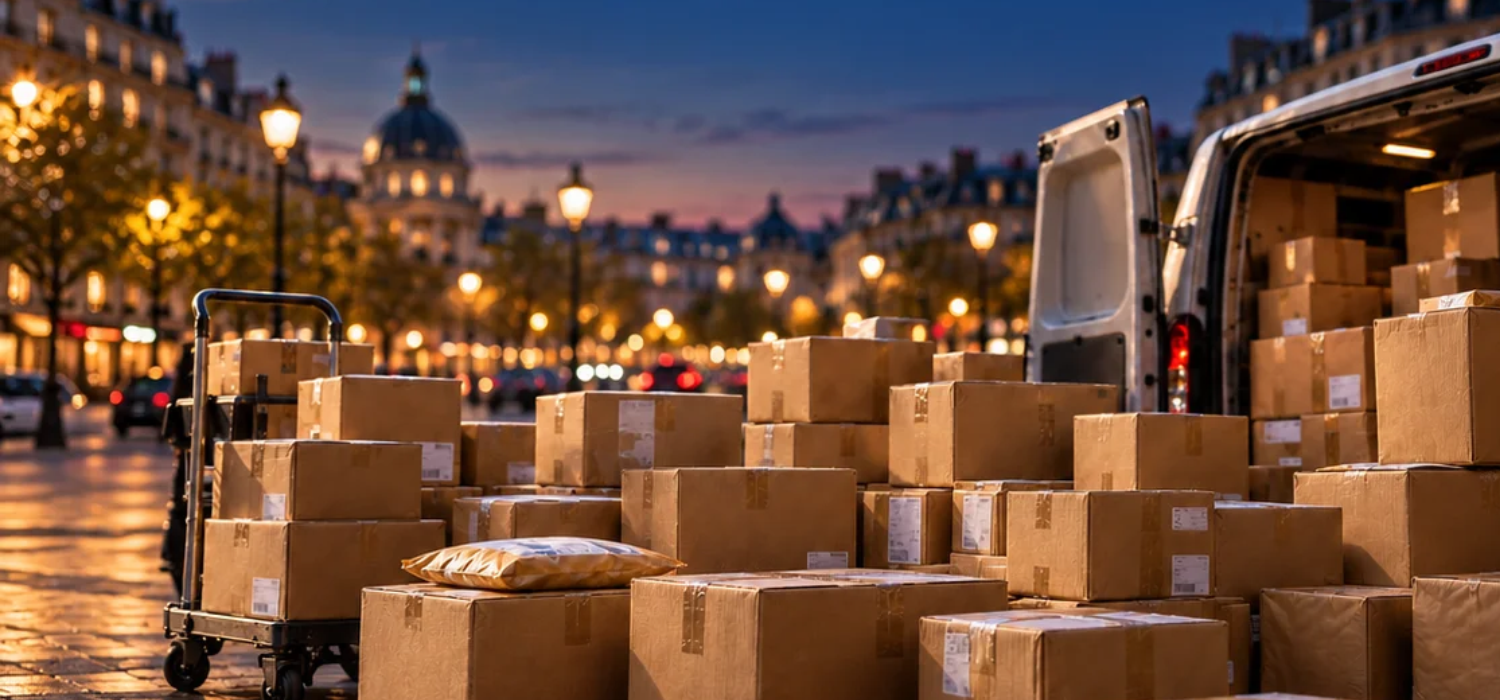

In the first half of 2026, Italian eCommerce generated 440 million B2C shipments, 45.7 million more than in the same period of 2025.
The 11.6% increase recorded by the Netcomm Delivery Index, developed in collaboration with Poste Italiane, highlights a capacity challenge for logistics operators: how can they manage the growing volume of shipments—and therefore parcels—across the last mile, where every stop requires time, space and resources?
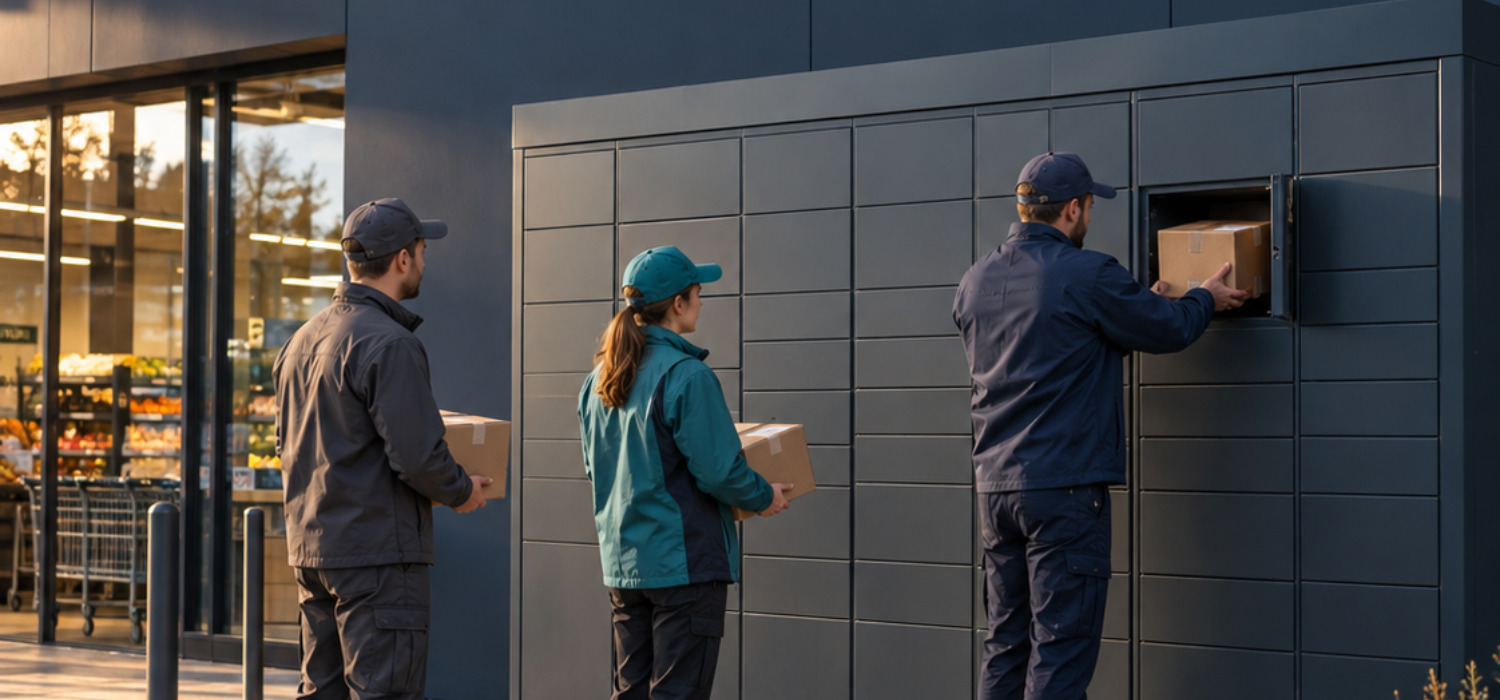
Out-of-Home networks can help address this challenge by consolidating some deliveries at Pick-up Points and Lockers. However, absorbing growing volumes also requires operational coordination: which shipments can be delivered to each location, how long they remain there and how they are assigned to the operators responsible for the service.
eCommerce shipments in Italy: where volumes are concentrated
The Netcomm Delivery Index data reveals not only growth in eCommerce shipments, but also a shift in their geographical distribution. North-Western Italy accounts for 29.7% of parcels, gaining 2.6 percentage points compared with the first half of 2025. Meanwhile, the relative shares of Southern and North-Eastern Italy have declined, accounting for 20% and 21.2% of the national total respectively.
For those planning last-mile logistics, this distinction matters considerably. Changes in parcel flows require operators to assess where services need to be strengthened and whether available capacity matches demand. Data by broad geographical area provides an initial guide. Decisions about where to activate a location or adjust a delivery route, however, require local information, down to individual neighbourhoods and destinations.
Delivery density determines the value of Out-of-Home
Delivering several parcels to a single Pick-up Point or Locker allows a courier to serve multiple recipients in one stop, instead of visiting each address. The benefit, however, depends on the volumes actually consolidated, the distance between locations and the time needed to drop off the parcels.
In other words, an extensive network is not enough: it needs to be used. For this to happen, Pick-up Points and Lockers must be located where customers regularly go, be available as delivery options at checkout and be integrated into couriers’ systems and delivery routes. These are the essential conditions for turning geographical coverage into effective delivery capacity.
A concentrated market requires networks that can handle different flows
Another interesting finding from the Delivery Index is the high concentration of shipments. In the first half of 2026, the top eight merchants—AliExpress, Amazon, eBay, Shein, Temu, Vinted, Zalando and Zooplus—generated 74% of all parcels shipped, while the remaining 26% came from all other businesses.
When such a substantial share of volumes depends on a small number of merchants, their commercial decisions can affect the workload of the logistics networks serving them. A promotional campaign, for example, can generate a large number of orders within just a few days, increasing the need for vehicles, staff and storage space. For the operators involved, advance visibility of expected volumes and shipment destinations therefore becomes essential to organise deliveries and prevent overloading the most exposed nodes.
The remaining 26% of volumes comes from other businesses, representing demand from eCommerce companies with different sizes, logistics agreements and requirements. For Out-of-Home service providers, bringing these shipments into the network therefore requires connections to multiple systems and processes compatible with couriers’ day-to-day operations.
Parcel dimensions and characteristics guide the choice of delivery location
In terms of product categories, clothing, sports goods and accessories account for 22.8% of the shipments recorded by Netcomm, followed by Health & Beauty (20.5%) and IT and consumer electronics (16.3%). For those organising Out-of-Home deliveries, however, these categories include products with very different requirements: a garment, a monitor and a temperature-sensitive item need different storage spaces and conditions.
Assessing how many parcels a network can absorb therefore also requires information about shipment dimensions and handling requirements. A Locker may have several available compartments, yet none large enough for an incoming parcel; a Pick-up Point may have room to receive a parcel but lack the required storage conditions. Matching this information with the characteristics of each location is essential to route goods to suitable destinations, reducing the risk of having to reorganise delivery.
Parcel dwell times and collection frequency determine network capacity
The number of compartments in a Locker indicates how many parcels it can hold at any one time, but not how many can pass through it over a week. This also depends on how long parcels remain there: until the recipient collects their parcel, the compartment stays occupied and cannot accommodate another delivery. Two locations of the same size can therefore handle different shipment volumes if parcels are collected more quickly at one of them.
At Pick-up Points, capacity depends not only on available space but also on opening hours and the work involved in receiving, storing and handing parcels over to customers. Any increase in volumes must be compatible with the shop’s operations, especially during peak collection periods.
Returns also affect capacity. Once dropped off by the customer, they occupy space until the courier collects them.
Planning the network and managing growing volumes therefore requires consideration of incoming deliveries, dwell times and outgoing flows, to prevent locations from reaching capacity just as demand rises. More frequent courier collections can reduce the accumulation of returns, while timely notifications and clear instructions can encourage recipients to collect their orders.
How to manage shipment growth with a last-mile orchestrator
Last-mile orchestration: coordinating volumes across shared networks
Growing eCommerce shipment volumes also test operators’ ability to use shared infrastructure. In carrier-agnostic locker networks, each courier plans its own deliveries, but available space also depends on parcels deposited by other couriers and on how quickly recipients collect them. A location can therefore become a bottleneck if incoming flows are not coordinated with its actual capacity.
To manage this balance, access rules and service schedules must be reflected in the systems that organise shipments. Operators need to establish who will handle the goods, the times by which they can be accepted and how information should be updated when shipments pass from one operator to another. As volumes increase, any misalignment can lead to shipment assignments having to be reorganised, parcels accumulating at storage locations and delays to subsequent deliveries.
This is the role of last-mile orchestration: connecting information from the different parties with operations across the network. The GEL Proximity orchestrator integrates multiple logistics operators, manages shipment assignments and monitors flows, synchronising order data across different systems. Managing space occupancy and cut-off rules—the deadlines for accepting shipments—allows activities to be organised around the constraints of Lockers and urban nodes. For networks that need to absorb more parcels, this coordination helps turn capacity spread across different locations into usable capacity.
With 45.7 million additional parcels in six months, eCommerce growth calls for a rethink of how deliveries are distributed across the last mile. Pick-up Points and Lockers allow multiple recipients to be served in a single stop, but their contribution depends on their location, how quickly space becomes available again and coordination between the operators using them. The ability to absorb new volumes is therefore measured by the number of parcels the network can handle each day while meeting service commitments, even as demand increases.
Managing more shipments requires a coordinated network. Discover GEL Proximity’s last-mile orchestrator and request a demo today to assess how to increase the delivery capacity of your Out-of-Home network.