
The world of shipping is changing, and with it, inevitably, so is eCommerce.
From electric bikes and vans to more futuristic solutions such as drones and self-driving robots, tomorrow’s shipping will no longer be as we know it today. Demonstrating this are recent developments in the last-mile arena: in India, for example, Amazon is experimenting with a circulatory apparatus that manages from pickups to deliveries through a network of small and large transportation vehicles capable of picking up and delivering any product for any need, from packages ordered online to products from neighborhood merchants.
From neighborhood store to online store
Driving the growth of the system is in fact the development of so-called proximity commerce, i.e., the digitization of small neighborhood stores that are beginning to offer their customers all the advantages of online shopping combined with the quality of the trusted store.
And the advantages, for merchants as well as citizens, are not indifferent: lower prices, fast, safe and efficient delivery, accessibility and greater convenience.
Needless to say, the system pioneered by Amazon in India is called “Easy Ship,” “easy shipping.” But is it really?
Underlying it all is always one word: technology. Algorithms, artificial intelligence and blockchain make this not only possible, but already a reality. However, it is not always as “easy” as it would like to seem.
Turning limitations into opportunities
1. The urban fabric
First and foremost, the urban fabric needs to be dense enough to make the system cost-effective. That is, it needs warehouses capacious enough to store the products of local merchants and guarantee fast deliveries. Amazon, however, seems to have thought about this aspect as well, with the opening, also in India, of Multi-Seller Flex (Msf), i.e., small storage sites of 600 square meters each.
2. Organization
It is then necessary to organize shipments and returns efficiently, planning routes, consumption, timing and environmental impact. Not a minor aspect, if we consider that deliveries of products ordered online generate traffic and CO2 emissions while the attention of sustainability increases proportionally and consumers demand more responsibility, also in environmental terms, from companies.
“Time, timing, and duration of the route, related to both pickup and delivery, become fundamental,” Roberto Liscia, president of the Netcomm consortium, recently explained in the pages of Repubblica. “The parcel itself begins to have a much larger digital footprint than the simple order placed on the large online portal where at the end there is only the sender, the recipient and the timing.
Alternative delivery modes
Without moving overseas, even in Italy it is already possible to experiment with innovative and sustainable delivery – and return – modes.
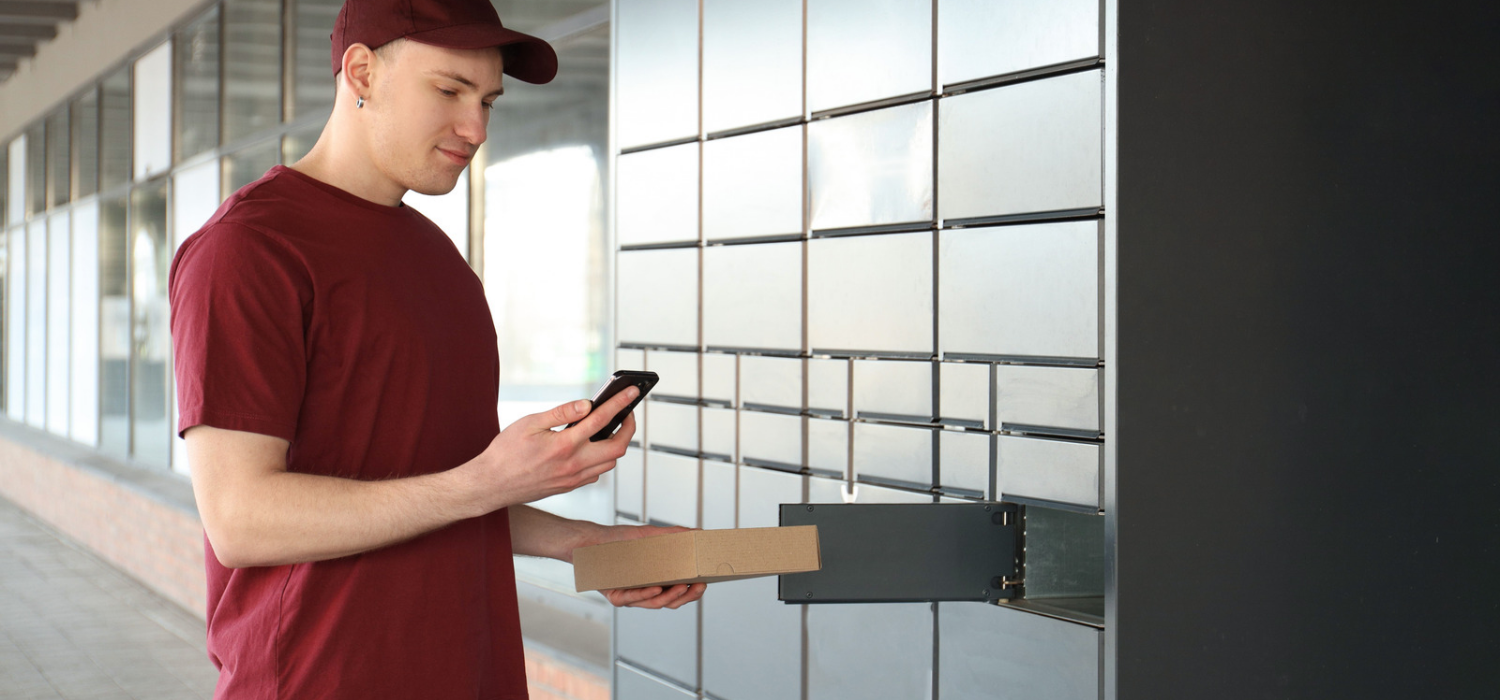
Nationwide, for example, there are more than 2,500 lockers, i.e., automated lockers for delivery and pickup of goods and documents.
Pickup points, i.e., businesses and others that provide their own space to receive packages and hold them until the customer picks them up, are also growing steadily and their expansion is potentially endless. In fact, any kind of business could convert into a pickup point, attracting traffic and, at the same time, ensuring safer and more efficient, as well as sustainable, deliveries.
The innovation of GEL Proximity
GEL Proximity, the world’s first platform that places last-mile logistics at the center of the customer shopping experience, also offers innovative, technological and easily integrated solutions for managing the relationship between the shopping cart and thousands of proximity logistics solutions.
GEL Proximity targets eCommerce, marketplaces, logistics operators, couriers, and carriers. If you want to get to know us better, contact us now.